

Moving to Cyprus from the UK is still possible, but Brexit changed the rules: British citizens became third-country nationals in EU member states, including Cyprus, on 1 January 2021. UK passport holders can visit visa-free for up to 90 days in any 180-day period; a longer stay means arranging the appropriate residence permission. Relocating to Cyprus from the UK now calls for careful planning around your status as well as the practicalities of the move.
It’s natural to wonder how a new country’s rules will affect your plans, especially when tax and driving are involved. This guide explains what Brexit means when relocating to Cyprus from the UK, how Cyprus tax residency works, and what to consider if you plan to drive or bring a vehicle.
You’ll find an overview of residence routes, the factors that shape tax residency, and key points about using a UK driving licence and importing a car. Understanding these considerations can help you plan your move with greater confidence.
Key Takeaways
- Plan to exchange your UK driving licence for a Cyprus-issued one if you’ll be driving there long term; your UK licence can be used for up to 6 months.
- Before bringing a car, look into customs relief conditions, including how long you’ve owned and used it and how long you’ve lived outside the EU.
- Compare everyday costs with your own budget: rent and groceries may be lower than in the UK, but your spending will depend on where and how you live.
- Assess your likely tax residency based on where you spend your time and your wider circumstances; Cyprus also has a 60-day tax residency option with conditions.
Driving licences and importing vehicles
Yes. You can drive in Cyprus on a UK-issued licence for up to 6 months; after becoming resident, you can apply for a Cyprus-issued licence without retaking a test. For a UK car, plan separately for import, registration and insurance, as customs relief depends on your ownership, use and residence history.
Using UK driving licences in Cyprus
A UK driving licence lets you drive in Cyprus temporarily, but the 6-month limit matters if you’re moving there permanently. A UK licence can’t be renewed or replaced while you’re resident in Cyprus, so deal with any renewal or replacement before your move. UK licence holders can apply to exchange it for a Cypriot licence without retaking a test.
Keep your residence documents with your travel papers. The UK Government advises residents to carry documents issued by the Republic of Cyprus when entering and leaving the country. This helps keep your driving licence and residency paperwork distinct, particularly if you travel internationally after settling in Cyprus.
Importing and registering UK vehicles
Importing a car means dealing with its customs position and the steps to register and insure it for use in Cyprus. Importing a car from the UK to Cyprus may involve tax or customs considerations. Customs relief may apply if you owned and used the vehicle in the UK for at least six months before leaving, and lived outside the EU for 12 continuous months before moving.
If you’re transferring residency, you may be able to import a vehicle you’ve owned and used for at least 6 months before the transfer. Keep documents showing ownership, use and the move date together, as they help establish whether the relief conditions apply. Registration is a separate step from import: organise the vehicle’s documents and registration arrangements, then arrange insurance for its intended use before driving it regularly. Check that the vehicle details on the paperwork match the car.
Why are British nationals moving to Cyprus?
The Republic of Cyprus and Northern Cyprus have different administrations, so identify which area you’re considering before planning residency, healthcare and daily arrangements. To enter Northern Cyprus, a UK passport must be valid for at least six months from arrival.
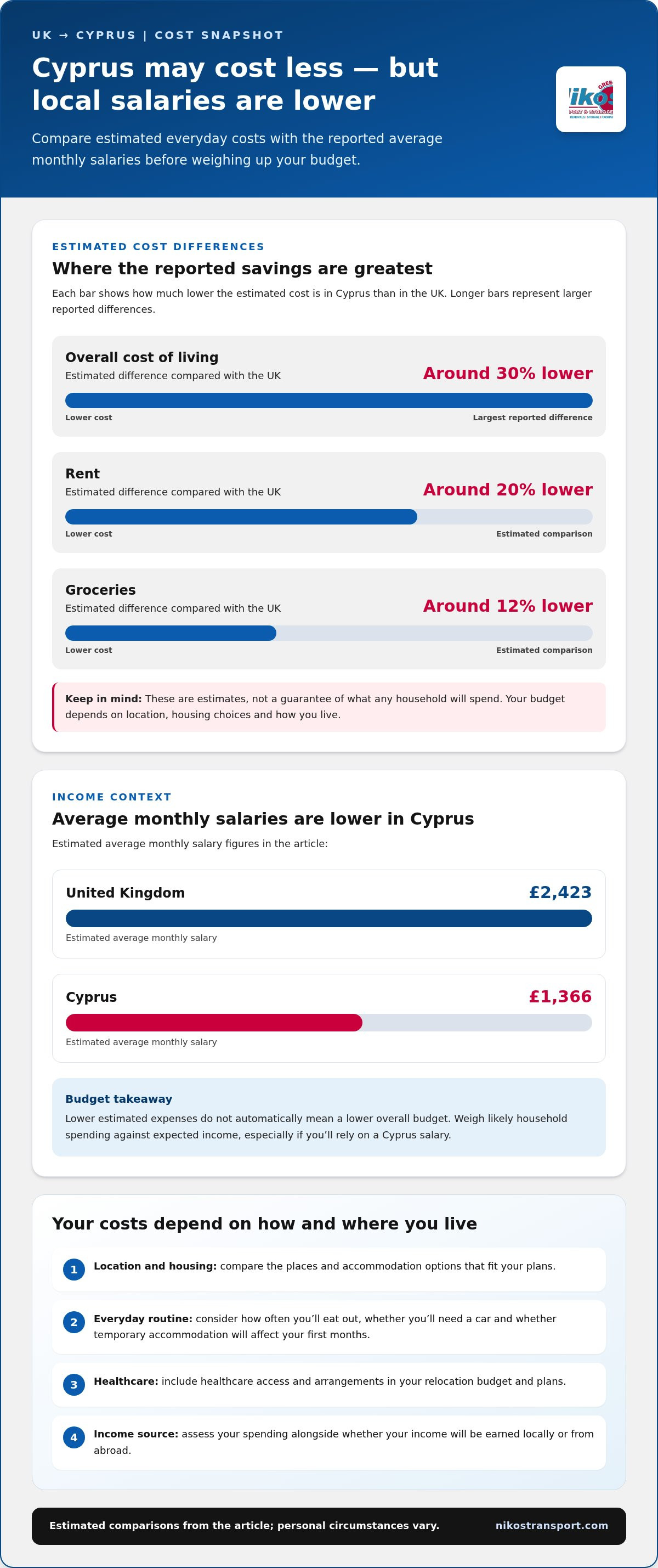
Cost comparisons can make Cyprus attractive, but they don’t mean every household will spend less. Estimates put the overall cost of living around 30% below the UK, with rent around 20% lower and groceries around 12% cheaper. Your own budget will depend on location, housing choices and whether your income is earned locally or from abroad.
Average monthly salaries are estimated at £1,366 in Cyprus and £2,423 in the UK, so lower expenses need to be weighed against local earning opportunities.
Daily routines also shape your decision. Consider how often you’ll eat out, whether you’ll need a car and how temporary accommodation might affect your first months. Include healthcare access and arrangements in your relocation budget and plans.
Living in the Republic of Cyprus can mean a different balance of housing costs, climate and everyday pace from the UK, but your circumstances matter. Compare likely household spending with expected income, especially if you’ll rely on a Cyprus salary. Paphos and other towns may suit different priorities, from services and transport to quieter surroundings.
The key practical difference is that the two areas have different administrations. Plan residency, healthcare and daily arrangements for the area you choose. For Northern Cyprus, a UK passport must be valid for at least six months from arrival.
Reasons British nationals relocate to Cyprus
For British citizens, Cyprus combines a warmer climate with options for long-term residence and retirement. The island is described as having 320 days of sunshine a year, and more than 40,000 British nationals live there. Familiarity with an established British community can make migration feel more manageable, though your own reasons may be work, family or a change of pace.
Tax treatment can also influence a move, particularly for pensioners and people planning their income across countries. Cyprus personal income tax starts at 0% on the first €19,500. Under the 2018 UK-Cyprus double tax treaty, pensions paid to someone tax resident in Cyprus are generally taxable only there, except pensions for government service. Tax residency depends on your circumstances, so consider it alongside your plans for where you’ll live and work.
Some people are drawn by the possibility of permanent residence. A person may be able to apply after living in Cyprus for 5 years or more. British citizens became third-country nationals in EU member states, including the Republic of Cyprus, on 1 January 2021. That change means a British passport alone does not establish a right to settle permanently; your residence route and documents matter from arrival.
For others, a 60-day tax residency option may be relevant if they don’t spend most of the year in another country. It’s a tax criterion, not a substitute for residence permission. Separate those decisions: first understand the immigration route that fits your purpose, then assess how your days, income and ties affect tax residence. The Department responsible for residence applications and the documents required will depend on your chosen route.
What are the income, savings, and health insurance requirements for moving to Cyprus?
There isn’t one income threshold for every UK applicant: the figure depends on the residence route and household. For example, the Cyprus Digital Nomad Visa income guideline is around €3,500 net per month at the time of writing. A single Category F applicant’s typical annual income guideline is around €24,000. Treat these as route-specific figures, not interchangeable targets.
For Category F, the stated minimum pension income is €10,000 per year, plus €5,000 for each dependent family member. A separate figure gives a typical single-applicant guideline of around €24,000 per year. These relate to different descriptions of the route, so compare the income evidence with your circumstances and application category rather than assuming one figure applies to everyone.
Investor routes have different financial conditions. The Cyprus Golden visa investment threshold is at least €300,000, while the stated yearly income requirement is €50,000 or more. Those figures describe separate financial measures: investment and income. Savings alone shouldn’t be treated as a replacement for income evidence where the route sets an income criterion. Organise bank statements, pension records or employment evidence around the specific route you intend to use.
Health insurance needs separate attention because income figures don’t explain what cover a residence application requires. Before moving, review the policy duration, medical exclusions, pre-existing conditions and whether the cover applies in Cyprus. Keep insurance documents with your application paperwork, alongside evidence of income and savings. Your healthcare arrangements may also depend on your residence status and personal circumstances.
Build a household budget around the relevant permit threshold, dependants and regular outgoings, not just the headline figure. Pensioners applying with dependants should check the income evidence required for their chosen residence route. Match each document to the requirement it supports, then keep copies together for the application process.
Nikos Transport & Storage: Transport To/From Greece
Nikos Transport & Storage can help organise the practical move as your residence plans take shape. Its Transport To Cyprus service handles the relocation of household belongings, and the Packing Service can help prepare items for transit. If your move date and new home aren’t aligned, the Storage Service lets you store belongings between stages. UK Removals can also support a move within the UK before departure.
The right support depends on what you’re moving and how your plans fit together. Whether you’re arranging a Cyprus move or transport to or from Greece, you can discuss the move’s requirements directly. For help planning your household relocation, contact Nikos Transport & Storage.
Make your next move manageable
If you’re relocating to Cyprus from the UK, make the household move part of your wider arrival plan. Consider when your accommodation will be ready, which belongings you’ll need first and whether a gap between departure and settling in calls for storage. These decisions can help you plan the move alongside your residence and tax arrangements.
Nikos Transport & Storage offers transport to Cyprus and to or from Greece, as well as storage for belongings between stages of a move. To choose a suitable arrangement, consider your route, what you’re moving and how your dates fit together. Outlining these details helps turn a major transition into manageable decisions.
When you’re ready to discuss the logistics of your move, contact Nikos Transport & Storage. With a plan that reflects your circumstances, you can take the next step towards your new home with confidence.
Frequently Asked Questions
Can you still move to Cyprus from the UK after Brexit?
Yes, British citizens can move to Cyprus, but they need the appropriate residence permission for a long-term stay. Since Brexit, UK nationals are treated as third-country nationals in Cyprus. A British passport permits visa-free visits for up to 90 days in any 180-day period, not settlement. If you’re relocating to Cyprus from the UK, base your plans on the residence route that matches your reason for moving.
Would I be required to pay tax to the UK and Cyprus?
Not automatically. Tax obligations depend on your residence status, income and the type of income you receive. The UK-Cyprus double tax treaty addresses which country can tax particular income, including pensions, but government-service pensions are an exception to the general treatment described for Cyprus tax residents. Keep records of where you live, work and receive income, as these details help establish your position across both countries.
What visa or residence permit do UK citizens need to move to Cyprus after Brexit?
The right permit depends on your purpose, such as retirement, remote work, investment or employment. UK passport holders can visit without a visa for up to 90 days in any 180-day period, but that allowance isn’t permission to settle. For a stay longer than three months, UK citizens planning a move must apply for a long-stay visa while still in the UK, then follow the residence process for their chosen route.
How much does it cost to live in Cyprus compared with the UK?
Estimates generally put living costs below those in the UK, but your actual budget depends heavily on housing, location and income. A city-centre rental, a quieter area and a home outside town can mean very different monthly outgoings. Compare likely rent, food, transport and healthcare costs with your expected income instead of relying on a single national average. This gives you a more useful household budget before moving.
How do I move household goods, pets, and a car from the UK to Cyprus, and what customs rules apply?
Arrange household goods as an international move and prepare the customs declaration and supporting paperwork. For pets, an Animal Health Certificate must be obtained between 48 hours and 10 days before travel; pets over 12 weeks need rabies vaccination at least 21 days before travelling. A car may qualify for customs relief if ownership, use and residence conditions are met. Keep evidence for each item and animal together.


