

Hiring a van yourself may look like the simplest way to move, but the right support can make a bigger difference than the vehicle you choose. House removals involve more than getting belongings from A to B: you’ll also need to plan packing, access, timing and what you can safely manage yourself.
If you’re unsure what a removal service includes or how to keep your belongings and plans organised, you’re not alone. Choosing between a DIY move and professional movers depends on the size of your move, your schedule and the help available. This guide explains what to check and how to prepare in a manageable order.
We’ll cover the details to discuss with a removal company, ways to protect your possessions and factors to weigh when deciding how much help to arrange. You’ll also learn where packing and storage may fit into your plans. Nikos Transport & Storage offers UK removals alongside packing and storage, so you can consider practical support that suits your move.
Key Takeaways
- House removals cover the organised transfer of household belongings, with the arrangements shaped by your needs and circumstances.
- Map out the move in stages, from agreeing requirements and timing to preparing belongings and checking what arrives.
- Compare DIY and professional options by considering the time, effort and coordination each would involve for your household.
- Sort items before packing and flag belongings that need extra care or a separate arrangement.
- Before choosing support, ask what’s included, clarify responsibilities and exclusions, and get the agreed details in writing.
House removals explained: what does a home-moving service involve?
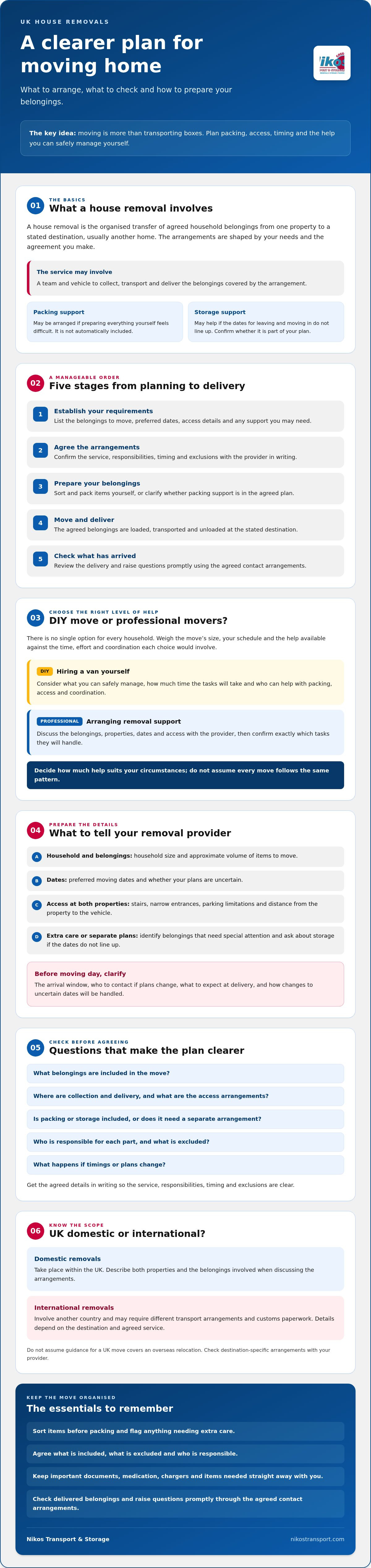
Moving home means coordinating a set of connected tasks, not simply transporting boxes. You may need to sort and pack belongings, agree collection and delivery arrangements, and work around the dates you can access each property. A house removal is the organised transfer of household belongings from one home to another. The service can bring structure to the move, but what’s included depends on the agreement you make.
House removal, at a glance: You arrange for household belongings to be collected from one property and transported to a stated destination, usually another home. Packing or storage may be arranged separately if needed.
For a general introduction to the role and history of moving companies, see What is a moving company. For your own move, focus on the practical scope of the service: which belongings are being moved, where they’re collected and delivered, and who is responsible for each part.
What can a house removal service include?
At its simplest, a removal service uses a team and vehicle to move agreed household belongings between properties. Packing and storage are separate forms of support, not automatic parts of every arrangement. You might need packing help if preparing everything yourself feels difficult, or storage if the dates for leaving and moving in don’t line up. Before agreeing, confirm what the service includes, what it excludes and what you’ll need to organise yourself.
How are house removals different from international removals?
Domestic removals take place within the UK. A move involving another country is international and may require different transport arrangements and customs paperwork. The details depend on the destination and the service agreed, so don’t assume that advice for a UK move will cover an overseas relocation. If you’re moving abroad, consult an international removals planning guide for information focused on that process.
For a UK move, describe both properties and the belongings involved when discussing arrangements. Mention anything that may need special attention or a separate plan, and check that collection, destination and responsibilities are clearly recorded. Nikos Transport & Storage offers domestic UK removals alongside packing and storage options. Deciding what support you need, rather than assuming every move follows the same pattern, makes the next planning decisions clearer.
How house removals work: from planning the move to delivery
A clear sequence helps you see what needs deciding and when. The timing and arrangements will depend on factors such as the size of your household, access at both properties and whether you need packing or storage support. Use this process as a planning framework, then confirm the details for your own move.
- 1. Establish your requirements: List the belongings to move, preferred dates, access details and any support you may need.
- 2. Agree arrangements: Confirm the service, responsibilities, timing and any exclusions with the provider in writing.
- 3. Prepare belongings: Sort and pack items yourself, or clarify whether packing support is part of the agreed plan.
- 4. Move and deliver: Belongings are loaded, transported and unloaded at the agreed destination.
- 5. Check delivery: Review what has arrived and raise any questions promptly using the agreed contact arrangements.
What information should you prepare before requesting removal support?
Give the provider a practical picture of the move. Note the size of your household and approximate volume of belongings, your preferred dates, and whether you may need storage between homes. Describe access at both ends accurately, including stairs, narrow entrances, parking limitations or the distance from the property to the vehicle. Clear details help the provider discuss a suitable plan and identify questions to resolve before the move is arranged.
It can also help to identify items that need extra care or a separate arrangement. If your plans or moving dates are uncertain, say so early and ask how changes would be handled. An American government resource on consumer protection for moving offers general prompts for checking arrangements, but its guidance is designed for the US, so check UK-specific terms and protections with your provider.
What happens on moving day?
Typically, the agreed team arrives, confirms the plan with you, loads the belongings covered by the arrangement, transports them and unloads at the destination. The order and timing can vary, so ask in advance about the arrival window, who to contact if plans change and what to expect at delivery. Keep important documents, medication, chargers and items you’ll need straight away with you rather than packed in the main load.
Before the move, make sure everyone involved understands which belongings are being collected and where they should go in the new home. Keep a short list of essentials and any instructions you’ll need during the day. If you’re considering support with a UK move, packing or storage, review Nikos Transport & Storage’s services and consider which options fit your plans.
DIY move or professional house removals: how to weigh the options
There isn’t one right way to move. The best fit depends on the size of your household, how much time you can set aside, the help available and the practical demands of moving your belongings. Compare the whole job, not just who drives the vehicle: packing, lifting, loading, travel and unloading all need to be accounted for.
| Consideration | Self-managed move | Professional removal support |
|---|---|---|
| Time and effort | You organise and carry out the tasks, often with help from others. | A provider handles the agreed parts of the move, which can reduce your workload. |
| Coordination | You arrange the vehicle, helpers, packing and timings. | You coordinate with the provider and confirm what they’ll manage. |
| Flexibility | You may have more control over the order and pace of tasks. | Plans depend on the agreed service and the provider’s arrangements. |
| Overall cost | Consider vehicle hire, fuel, materials and your time. | Compare written quotes and the specific work included. |
When might a self-managed move suit your household?
A self-managed move may suit a smaller load, flexible dates and a household with willing helpers. First check that you can access a suitable vehicle and manage packing, loading and unloading safely. Think through the full day, including collecting or returning the vehicle, travel time and any trips needed. A plan that looks straightforward on paper may take longer if access is difficult or the load is larger than expected.
When can professional house removals help?
Professional support can reduce the number of moving tasks you need to coordinate yourself, particularly the transport and handling of belongings covered by your agreement. But hiring movers doesn’t automatically mean handing over everything. You might pack yourself and arrange transport, or ask whether packing or storage support is available if your circumstances call for it.
Compare written service scopes rather than assuming every provider includes the same work. Check which belongings are covered, what you’re expected to prepare, and whether packing or storage is included or arranged separately. A clear comparison helps you judge the options on time, effort and responsibilities, as well as money. For a smaller move with practical help on hand, DIY may be manageable. If coordinating the physical work would stretch your time or available support, a professional service may better match your needs.
Preparing for house removals: a plan for your belongings
Getting ready in stages makes the work easier to manage and helps prevent last-minute confusion. Start by deciding what’s moving, then prepare items room by room. Clearly identify anything that needs special care or a separate arrangement. You don’t need to pack everything at once. A little order now can make finding essentials and unpacking at the new home much simpler.
How can you organise and pack household belongings?
Begin by sorting belongings into what you’ll move, keep elsewhere, donate or dispose of. As you pack, group items by room and label each box with its destination and a brief description of the contents. A simple inventory can help you keep track of boxes, particularly if you’re moving a larger household.
Protect fragile items appropriately and let your mover know about anything that may need extra care or a separate arrangement. Don’t assume specialist handling or packing materials are included: ask what the agreed service covers. If you’re packing yourself, avoid making boxes too heavy to lift comfortably and keep similar items together where practical.
Set aside an essentials box, or keep a small bag with you, for items you’ll need straight away: medication, important documents, chargers, toiletries and a change of clothes. Keep it separate from the main load so you can find it without opening several boxes after arrival.
What should you arrange before the removal team arrives?
Use the days before the move to check the practical details against your written agreement. Confirm the date, access arrangements, contact details and service scope. If you’ve arranged packing support, clarify which rooms or belongings are covered and what you’re expected to prepare yourself. Packing help is a separate option from transport, so check what’s included rather than relying on assumptions.
- Keep routes through the home and collection areas clear, moving loose items that could obstruct access.
- Set aside belongings that aren’t part of the move and make them easy to distinguish from items being collected.
- Tell the provider promptly if the belongings, access details or arrangements have changed.
These checks give everyone a clearer picture of what’s ready to go and what needs to stay behind. If you’d like help with packing as part of your move, explore UK removals and packing support from Nikos Transport & Storage.
Choosing house removals support: questions to ask before you decide
A suitable removal provider is one whose agreed service matches your household’s needs, timing and responsibilities. Rather than relying on assumptions or a broad description of the service, ask specific questions and request clear written details. That gives you a fair basis for comparing options and helps avoid uncertainty about what you or the provider are expected to arrange.
What should a removal quote or service agreement make clear?
Check that the written information sets out what’s included and what isn’t. Ask whether the arrangement covers transport and loading or unloading labour, and whether packing or storage is included, optional or outside the service. If you’re packing yourself, clarify what needs to be ready before collection.
- Dates and timings: What collection date and arrival window are agreed? How will you be told if timings change?
- Collection and delivery: Which properties and belongings are covered, and what delivery arrangements should you expect?
- Changes and communication: Who should you contact if your plans, access or moving dates change, and how might this affect the arrangements?
- Responsibilities and exclusions: What must you prepare or organise, and are any items excluded from the move?
- Insurance and liability: What terms apply to your belongings during the move? Ask the provider to explain the relevant cover, limits, exclusions and process for raising a concern.
Compare like with like: two quotes may describe different tasks, even if both refer to a removal service. If a detail matters to you, such as packing a particular room or storing belongings between homes, have it confirmed in writing before you agree. Don’t assume a service includes specialist handling or extra support unless it’s clearly stated.
How can you make the next step feel straightforward?
Before contacting a provider, prepare a brief outline of your move. Include the approximate amount of belongings, preferred dates, access details at both properties and any packing or storage needs. Note questions about timing, responsibilities or items requiring extra care. This gives the provider useful context and helps you assess whether the proposed arrangements fit.
Nikos Transport & Storage offers UK domestic removals alongside packing and storage. Whether you need transport alone or are considering additional support, discuss your specific requirements and ask for the agreed scope to be confirmed clearly.
Discuss your house removal requirements
Make your next move feel more manageable
A smoother move starts with a clear plan: understand what your removal service covers, prepare belongings in stages and confirm responsibilities and timings in writing. Then weigh DIY against professional support based on the time, effort and practical help available to you. The right choice is the one that fits your household, not a one-size-fits-all answer.
With house removals, clear communication can make a real difference. Share accurate details about your belongings, access and preferred dates, and ask about packing or storage if those options would help your plans.
Nikos Transport & Storage offers domestic UK removals, packing and storage. If you’re considering support, discuss your house removal requirements and what you need for your move. With the arrangements clearly understood, you can take the next step with greater confidence and look ahead to settling into your new home.
Frequently Asked Questions
What do house removals usually include?
House removals generally involve organising the transport of household belongings from one home to another. The precise service depends on the provider and your agreement. Packing or storage may be available as additional support, but don’t assume either is included automatically. Before confirming arrangements, ask what transport, labour, packing materials, storage and delivery arrangements are covered, and make sure the agreed service scope is clear in writing.
How far in advance should I book house removals?
The right lead time depends on your preferred moving date, the size and complexity of the move, and the provider’s availability. Start making enquiries as soon as your plans are reasonably clear, particularly if your dates are fixed. Share accurate details about your belongings and access needs so the provider can discuss the move with you. Before booking, confirm the arrangements and ask how date changes would be handled.
Is it worth hiring professional house removals?
It depends on how much you’re moving, the time and help available, and how much of the work you want to coordinate yourself. A self-managed move may suit a smaller move or flexible schedule, provided you can arrange a suitable vehicle and manage the tasks involved. Professional support can help organise transport and handling. Compare the service scope, responsibilities and any optional packing or storage before deciding what suits your household.
How do I prepare for house removals?
Start by sorting your belongings and deciding what will move, then pack in manageable stages. Group items by room, label boxes clearly and keep essentials such as medication and important documents accessible. Identify fragile or unusually bulky belongings and ask the provider whether they need a separate arrangement. Before moving day, confirm dates, access details, contact arrangements and the agreed service scope, and communicate relevant changes promptly.
Can removal companies pack my belongings and store them?
Some removal providers offer packing and storage as additional services, but availability and terms vary. Ask whether packing materials, labour and any special handling are included, and clarify how storage is arranged and managed. If you may need storage between homes, explain your expected timing and requirements when you enquire. Confirm what’s included and any responsibilities in writing, rather than assuming packing or storage forms part of every removal service.
What should I ask a house removal company before booking?
Ask what the service includes, how collection and delivery will work, and what you need to pack or prepare yourself. Confirm dates, contact arrangements, how changes are handled, whether storage is available and what’s excluded. Check the provider’s written terms for insurance and liability, including any limits or exclusions, rather than relying on assumptions. A concise, accurate outline of your belongings and access needs will help make the discussion more useful.


