
The most obvious transport option isn’t always the best fit for a shipment to Greece. Scheduled road transport UK Greece may suit your timing and handling needs, while sea freight may work better for a different type or size of load. The right choice depends on what you’re sending and how it needs to travel.
If you’re comparing scheduled road transport with sea freight, it’s understandable to want clear expectations about collection, delivery, schedules and paperwork before making a decision. “Scheduled” describes a planned service, but arrangements and suitability can vary by shipment. Check the details rather than assuming every load follows the same process.
This guide explains the main stages of scheduled road transport, how to weigh it against sea freight, and what to ask before booking. Nikos Transport & Storage offers weekly scheduled road transport between the UK and Greece, as well as sea freight logistics. Use these options as context while comparing services against your own requirements.
Key Takeaways
- Check what “scheduled” means with each provider, including how recurring departures affect collection and delivery arrangements.
- Compare scheduled road transport UK Greece with sea freight by considering your shipment, handling needs and preferred delivery arrangements.
- Check whether your collection window fits the provider’s schedule and whether the service is suitable for your shipment.
- Ask what shipment details and paperwork are needed, and confirm who is responsible for each step.
- Compare written service details, scheduling and communication to set clear expectations before booking.
Scheduled road transport UK Greece: what it means
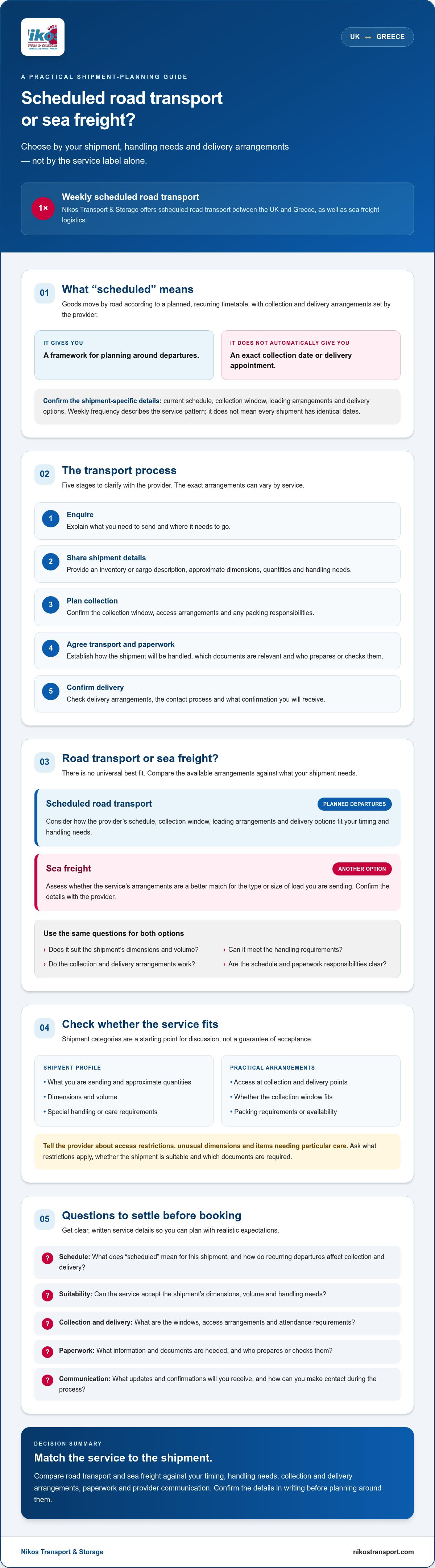
Scheduled road transport is the planned movement of goods by road on a recurring timetable, with collection and delivery arrangements set by the provider. A departure pattern doesn’t automatically tell you when your goods will be collected or delivered. Confirm the current schedule and shipment-specific arrangements before booking.
A scheduled service provides a framework for planning, but it isn’t the same as choosing a bespoke departure time. Nikos Transport & Storage offers weekly scheduled road transport between the UK and Greece. This confirms the service frequency, not identical collection or delivery dates for every shipment.
How a scheduled service differs from a dedicated road move
A scheduled service works around planned departures, whereas a dedicated road move is arranged specifically for one shipment and may offer a different degree of timing flexibility. Don’t assume a scheduled load will share space with other customers’ goods: consolidation depends on the provider’s arrangements for that shipment. Ask about collection windows, departure frequency, loading arrangements and delivery options so you understand what the timetable means in practice.
Road schedules also need to account for drivers’ permitted driving times, breaks and rest periods. The EU driver hours regulations explain how these rules shape professional driving. A planned departure shouldn’t be treated as an exact delivery appointment, so confirm the provider’s stated expectations for your consignment.
Which shipments may suit scheduled road transport?
Household goods, personal effects and commercial cargo are categories to discuss with a provider, not a guarantee that every item or load will be accepted. Suitability depends on the shipment’s dimensions and volume, access at collection and delivery points, handling requirements and the information needed for its paperwork.
Before requesting a service, prepare a clear description of what you’re sending, approximate quantities and any handling considerations. Mention access restrictions, unusual dimensions or items that may need special care. Then ask the provider to confirm whether the shipment is suitable, what restrictions apply and which documents are required. This lets you compare a scheduled option with alternatives against your actual needs, rather than relying on the service label alone.
How scheduled road transport between the UK and Greece works
Arranging scheduled road transport UK Greece usually starts with an enquiry, then moves through shipment assessment, collection planning, transport and delivery. The sequence is straightforward, but details vary by provider. Collection windows, loading arrangements, paperwork processes and delivery options may differ, so ask for the arrangements in writing before planning around them.
In brief, the process is:
- 1. Enquire: Explain what you need to send and where it needs to go.
- 2. Share shipment details: Provide an inventory or cargo description, approximate dimensions and handling needs.
- 3. Plan collection: Confirm the collection window, access arrangements and any packing responsibilities.
- 4. Arrange transport and paperwork: Agree how the shipment will be handled and who prepares or checks relevant documents.
- 5. Confirm delivery: Check the delivery arrangements, contact process and what confirmation you’ll receive.
What to prepare before requesting a transport plan
A useful enquiry gives the provider enough information to assess the shipment and explain the next steps. Prepare an inventory or cargo description, approximate dimensions, collection details and destination requirements. Note anything that may need special handling, and ask whether it can be accepted and whether packing is available or required. Share the personal and shipment details requested for the proposed service, and ask how they’ll be used to arrange transport.
These details help the provider explain whether the service appears suitable and what further information is needed. They can also bring practical issues to light early, such as access at either end or items that need particular care.
Collection, transport, paperwork and delivery
Once you’ve agreed a plan, the provider will confirm collection arrangements and explain how loading and onward transport are organised. The exact steps, timing and updates vary by service. Before collection, ask what confirmation you’ll receive, how to make contact during the process and whether someone needs to be present for delivery or arrange access.
Clarify who is responsible for preparing and checking customs declarations, and what information you need to supply. Nikos Transport & Storage offers customs declaration support, but confirm the scope for your shipment and any documents you must provide. For a general reference on operator requirements, consult official UK guidance for international road haulage. Check delivery access and contact arrangements before the shipment leaves.
To discuss how these steps could apply to your shipment, you can ask about transport to Greece and confirm current service details directly with Nikos Transport & Storage.
Scheduled road transport or sea freight: compare what matters
Choosing between road and sea freight is less about assuming one is always faster, cheaper or safer, and more about matching the service to your shipment. The right mode depends on your shipment requirements and the confirmed service arrangements. A provider’s route, handling method and delivery plan affect what each option means in practice, so compare written details for your consignment.
Use these questions to make the comparison practical:
| What to compare | Ask about scheduled road transport | Ask about sea freight | Why it matters |
|---|---|---|---|
| Planning | How does the planned departure schedule fit your collection window? | What are the booking, departure and arrival arrangements for this shipment? | Helps you check whether the service fits your preferred timing. |
| Handling | How will the shipment be loaded, carried and protected? | How will it be packed, handled and moved between transport stages? | Clarifies what preparation your goods may need and who is responsible. |
| Suitability | Can the provider accept the shipment’s size, contents and handling needs? | Is this shipment suitable for the sea freight option being proposed? | Prevents assumptions based on transport mode alone. |
| Delivery | What collection and delivery arrangements apply? | How will final delivery be organised, and what coordination is required? | Shows how much planning you’ll need at each end. |
| Paperwork | Which documents are needed, and who checks them? | Which documents are needed, and who checks them? | Helps you understand your responsibilities before the shipment moves. |
Answers vary by provider, shipment and route. To compare like with like, share the same inventory, dimensions, handling requirements and delivery needs when requesting options. Ask the provider to state any assumptions or exclusions, especially if the arrangement depends on access, packing or extra coordination.
When scheduled road transport may be a practical fit
Road transport may suit you if a planned, recurring service aligns with your collection window. For scheduled road transport UK Greece, check how the departure pattern connects to collection and delivery for your shipment. Door-to-door options may reduce the coordination you need to manage, but confirm what is included and whether it applies to your requirements.
When sea freight may be worth comparing
Sea freight is another option to assess, particularly by asking how the proposed service handles your shipment’s size and requirements. Ask providers to explain consolidation, handling, documentation and final delivery for both modes, then compare the actual arrangements rather than relying on broad claims. Nikos Transport & Storage offers both scheduled road transport and sea freight logistics, but the suitable option depends on the shipment. For wider context on professional practice in logistics, consult the Chartered Institute of Logistics and Transport (CILT).
How to decide whether scheduled UK-Greece road transport suits you
Start with the shipment, not the transport label. Consider what you’re sending, when it needs to be collected and delivered, how it must be handled, and what paperwork needs arranging. Then compare those requirements with the provider’s confirmed service details. For scheduled road transport UK Greece, check in particular whether your preferred collection window fits the departure schedule.
A five-point check before choosing a transport mode
- List the shipment: Note the contents, approximate volume and any items that may need special handling. Confirm acceptance and packing arrangements with the provider.
- Check access: Describe collection and delivery access conditions, including practical restrictions that could affect loading or unloading.
- Match the timing: Compare your preferred collection window and delivery requirements with the proposed schedule. Ask what flexibility is available if your plans change.
- Clarify handling: Explain any care or packing needs, then confirm how the shipment will be handled at each stage and what you need to prepare.
- Confirm paperwork: Ask which documents and shipment details are needed, who prepares and checks declarations, and what support the provider can offer.
Documentation requirements can depend on the shipment and current arrangements. Confirm the details with your provider before booking, and verify customs information with an appropriate, up-to-date source rather than relying on assumptions or old paperwork.
Questions to ask a transport provider
Ask how often departures operate, what collection windows are available and how the provider will tell you about schedule changes. If door-to-door service is discussed, clarify what it means for your collection and delivery addresses, including any access or handling conditions. Get the agreed arrangements in writing so you can see exactly what is included.
- Which services are included, and what is excluded?
- What are my responsibilities for packing and shipment information?
- Who prepares and checks customs declarations, and what details must I supply?
- What delivery arrangements and contact updates should I expect?
For broader preparation, see this international removals planning guide. Nikos Transport & Storage offers weekly scheduled road transport between the UK and Greece, as well as customs declaration support. To discuss whether its current arrangements suit your shipment, ask about transport to Greece and confirm the details directly with the team.
Choosing a scheduled road transport provider for Greece
A provider should make it straightforward to understand what will happen to your shipment, from collection planning to delivery. For scheduled road transport UK Greece, look for clear answers about departure frequency, handling, communication and paperwork. Written details about how the service applies to your shipment are more useful than general assurances.
Signs that a provider has explained the service clearly
Before committing, check that the provider has explained how collection is planned, what delivery arrangements are available and how your goods will be handled. They should also clarify who prepares and checks customs declarations, what information you need to supply and what support they provide. Ask for the agreed service details in writing so you can compare options fairly and identify exclusions.
Clear communication matters throughout, not just at the enquiry stage. Ask who will contact you about the shipment, how schedule changes are shared and what confirmation you’ll receive after collection. If an answer depends on your shipment details, ask what needs to be confirmed before you book.
What to share when enquiring with Nikos Transport & Storage
To help the team understand your requirements, provide a description of the shipment, its approximate volume, collection and destination details, and your preferred timing. Include relevant handling needs or access considerations. Then ask whether scheduled road transport or sea freight is more suitable for your circumstances, and what arrangements are currently available. The right choice depends on the shipment and confirmed service details.
Nikos Transport & Storage is a family-owned UK business established in 2003. It offers weekly scheduled road transport between the UK and Greece, as well as sea freight logistics. These details provide context, but they don’t establish that every option suits every shipment or that a particular departure is available. Confirm current arrangements and documentation responsibilities directly before making plans.
A considered enquiry can help you understand the options. Share the details that matter to your shipment and ask any questions you need answered before deciding. Discuss your UK-Greece transport requirements.
Choose the option that fits your shipment
The right transport choice comes down to your shipment’s size, handling needs and acceptable timing. A recurring road schedule can provide a clear planning structure, while sea freight is another option to compare against the collection, handling and delivery arrangements on offer. In either case, check who is responsible for paperwork and ask for the agreed service details in writing.
Before choosing scheduled road transport UK Greece, check that your preferred collection window aligns with the provider’s current schedule and confirm that the service suits your shipment. Clear expectations at the outset make it easier to plan each step.
Nikos Transport & Storage is a family-owned business founded in 2003, offering weekly scheduled road transport between the UK and Greece. To discuss your shipment and check current arrangements, discuss your UK-Greece transport requirements.
With the right questions and a clear plan, you can move forward knowing what to expect. Contact Nikos Transport & Storage to discuss your UK to Greece transport requirements.
Frequently Asked Questions
What is scheduled road transport from the UK to Greece?
Scheduled road transport is the planned movement of goods by road according to a recurring timetable. It differs from arranging a vehicle to depart at a bespoke time for one shipment. The schedule doesn’t automatically confirm your collection or delivery date, so check those arrangements with the provider. Ask how often departures run, how your shipment fits the service and whether it will share transport with other goods.
How does scheduled road transport to Greece work?
It usually starts with an enquiry and details about your shipment, followed by collection planning, transport and delivery. Agree the collection window, handling arrangements, delivery expectations and paperwork responsibilities with the provider. These details vary by service and shipment. Before booking, ask what information and documents you need to provide, who can assist with declarations and how collection and delivery will be confirmed.
Is scheduled road transport better than sea freight for moving goods to Greece?
Neither mode is automatically better. The right option depends on your shipment and the arrangements available. Compare collection and delivery, handling, paperwork, suitability and how each service fits your timing. Ask providers to explain the proposed road and sea freight options using the same shipment details. Check what is included and any exclusions in writing, rather than relying on general claims about speed, cost or suitability.
How often does scheduled road transport run from the UK to Greece?
Departure frequency depends on the provider and service. Nikos Transport & Storage offers weekly scheduled road transport between the UK and Greece, but confirm current departure and collection arrangements directly. Ask how the planned departure relates to your preferred collection window and what delivery expectations apply to your shipment. Don’t assume every provider, route or consignment follows the same timetable.
What paperwork is needed to transport goods from the UK to Greece?
The documents and shipment details required depend on the goods and the service, so confirm current requirements before booking. Ask the provider for a clear list of what you must supply and whether it will prepare or check any customs declarations. Nikos Transport & Storage offers customs declaration support; confirm what that covers for your shipment. Avoid relying on old paperwork or assumptions about current documentation.
Can household goods be sent to Greece using scheduled road transport?
Household goods may be suitable, but acceptance depends on the provider’s service and the shipment’s contents, volume, access and handling needs. Share an inventory or clear description, approximate dimensions and details of any items requiring special care. Ask about packing, restrictions and collection and delivery arrangements before making plans. A provider’s general service description isn’t confirmation that every item or shipment can be accepted.
What should I ask before booking a UK-Greece transport service?
Ask about departure frequency, collection windows, delivery arrangements and how schedule changes are communicated. Confirm how your goods will be handled, what “door-to-door” means for your addresses, and which services or exclusions apply. Clarify what paperwork is needed and who prepares or checks declarations. Request the agreed details in writing, then compare them with your shipment’s contents, timing, access and handling requirements before booking.


