

A calmer move depends not just on when you start packing, but on getting decisions and handovers in the right order. This moving home checklist gives you a clear sequence to follow, from early preparations through moving day and your first week in your new home.
Moving house can leave you juggling packing, paperwork, address changes and service arrangements all at once. It’s easy to worry that an important task will slip through the cracks, especially when you’re not sure what to tackle first. A step-by-step plan breaks the work into manageable stages and helps you keep track of the details.
Use this practical UK guide to plan what to do and when, organise your belongings and important documents, and prepare for a smoother handover. You’ll find prompts for updating your address, arranging essential services, packing with purpose and keeping moving-day essentials close at hand. We’ll also cover the first jobs to tackle after you arrive, so you can settle in with less stress and a little more order.
Key Takeaways
- Use a moving home checklist to put key decisions in order and keep each stage manageable.
- Confirm dates, access and responsibilities early so everyone knows what needs to happen before moving day.
- Sort and declutter belongings before packing to avoid moving items you no longer need.
- Check address changes and household services directly with each organisation, as arrangements may differ.
- Keep moving-day essentials close, then prioritise safety and essential services before unpacking everything.
Moving home checklist: what to organise before you set a date
A move feels more manageable when you break decisions into stages. Before filling boxes or booking help, get clear on the dates, access arrangements and people involved. Your plans may depend on a tenancy start or end date, a property completion, or when you can collect the keys. Treat any unconfirmed date as provisional. Avoid making firm arrangements that rely on it until the relevant details are settled.
A moving home checklist is a dated plan of decisions, tasks and handovers that helps everyone know what needs to happen, and when. Make yours fit your household. Focus first on essentials, such as confirming access and deciding who will handle each task. Then add optional jobs, such as arranging professional packing or asking family and friends for help. The right choices depend on your time, belongings and budget; not every move needs the same plan.
Set your moving date and build a realistic timeline
Once the date is confirmed, work backwards and add personal deadlines. Note anything that could affect the plan, including tenancy dates, completion arrangements, key collection and access to either property. If timings are still uncertain, write down what needs confirmation and who will check it. This makes potential clashes visible while there’s still time to adjust.
Set reminders for tasks that are easy to leave until the last minute:
- Arrange moving help once the date and access details are clear.
- Sort belongings before deciding what needs to be packed.
- Pack items you rarely use before everyday essentials.
Leave room in your timeline for the unexpected, and review it whenever a key date changes. A checklist should guide the move, not create pressure to follow a plan that no longer fits.
Create one reliable place for moving information
Keep the details together in a notebook, folder or shared digital document. Include quotations, contact details, inventory notes and confirmations. Add access instructions, parking arrangements and key collection details as they’re agreed. Having one source of information makes it easier to check what’s settled and spot what still needs attention.
Share relevant dates and responsibilities with everyone involved, including household members and any friends or family helping with tasks. Be specific: note who is confirming access, who is keeping track of important documents and who needs to be available for key collection. Keep essential tasks easy to find, and list optional jobs separately so you can prioritise if time becomes tight. If move dates or access don’t align, consider whether storage could bridge the gap.
Moving home checklist for the weeks before moving day
Once your move date is taking shape, use the weeks beforehand to turn plans into manageable jobs. Adapt the order to your household and any dates still being confirmed. Sorting before packing is more than a chance to clear clutter: it means fewer items to wrap, carry, unpack and make decisions about at the other end.
Sorting early makes packing simpler and unpacking easier, because you only handle the belongings you’ve decided to keep.
Sort belongings, arrange packing and protect essentials
Work through one area at a time, deciding what to keep, donate, sell, recycle or discard. Set aside anything you need until moving day rather than sealing it in a box too soon. As you pack, label each box with its destination room and a short description of the contents, such as “kitchen, mugs and glasses”. Mark fragile boxes clearly and, where practical, keep them separate from heavier items.
Keep a simple inventory by room, or number each box and list its contents. This helps you check what’s been packed and find key items without opening every box. Set aside medicines, chargers, important documents and everyday essentials for a first-night bag that stays accessible.
Coordinate removals, packing help and storage
If you’re requesting removals quotations, give providers a consistent picture of what needs moving. Describe the belongings, access arrangements at both properties and your expected timing. Check what each quotation includes and whether you need to discuss any access details, so you can compare like with like.
Choose the level of help that suits your time and budget. You might pack everything yourself, use a packing service, or pack most belongings and ask for help with selected items. As the date approaches, review what’s left and adjust your plan if needed.
If you can’t move straight into your new home, or access arrangements leave a gap, storage may be worth considering. Confirm the dates and practical arrangements before deciding what belongings need to be stored and when you’ll need them again. For help planning the move itself, explore UK removals and packing options.
A simple order for the final preparations
- First: Sort belongings and decide what you’ll pack yourself or ask others to handle.
- Next: Pack less-used items, label boxes and update your inventory as you go.
- As moving day approaches: Keep everyday essentials out of the boxes and check that transport, packing and storage arrangements still match your plans.
Address changes and home arrangements to check before you move
A change of address involves more than forwarding post. Each organisation may have its own process, so use your moving home checklist to track who you’ve contacted, what needs updating and whether you’ve received confirmation. Don’t assume that telling one provider or public body will update every record automatically.
Notify organisations and arrange essential services
Start with organisations that need accurate contact details for accounts, payments or important correspondence. Make a list that fits your circumstances, such as:
- Banks, building societies, insurers and pension providers
- Your employer, regular healthcare providers and relevant public bodies
- Schools, subscription services and other organisations that send post
Notifying a service provider and updating an official address record are separate tasks, so check each organisation’s process rather than relying on an automatic transfer. For public-body records, consult the relevant official guidance to confirm what applies to you and whether there are deadlines.
Contact utility providers about account changes and meter readings. Ask your broadband provider whether your existing service can transfer or whether you need a new arrangement. Confirm dates and any steps you’re responsible for. Review home insurance for both properties around the handover, and check with your insurer that the cover arrangements match your move. Providers don’t all work in the same way, so keep confirmation messages and note anything still outstanding.
Royal Mail redirection may help catch post sent to your old address, but check its current options, terms and application requirements directly before relying on it. Treat it as a back-up, not a replacement for changing your address with organisations.
Prepare the old and new homes for handover
Before leaving, check the arrangements agreed for the property. Depending on your circumstances, this may include cleaning, recording final meter readings, returning keys and meeting any property condition requirements. Take dated meter readings and keep a record for your accounts. If you’re renting, refer to your tenancy information for the agreed handover process.
At the new home, confirm how and when you’ll collect the keys, who can provide access and whether essential services will be available when you arrive. Check the electricity, gas and water arrangements, and establish what you need to do to activate or transfer accounts. If anything is unclear, contact the relevant provider or property contact before moving day.
Moving overseas adds further arrangements to consider. For a broader overview, see this international removals planning guide.
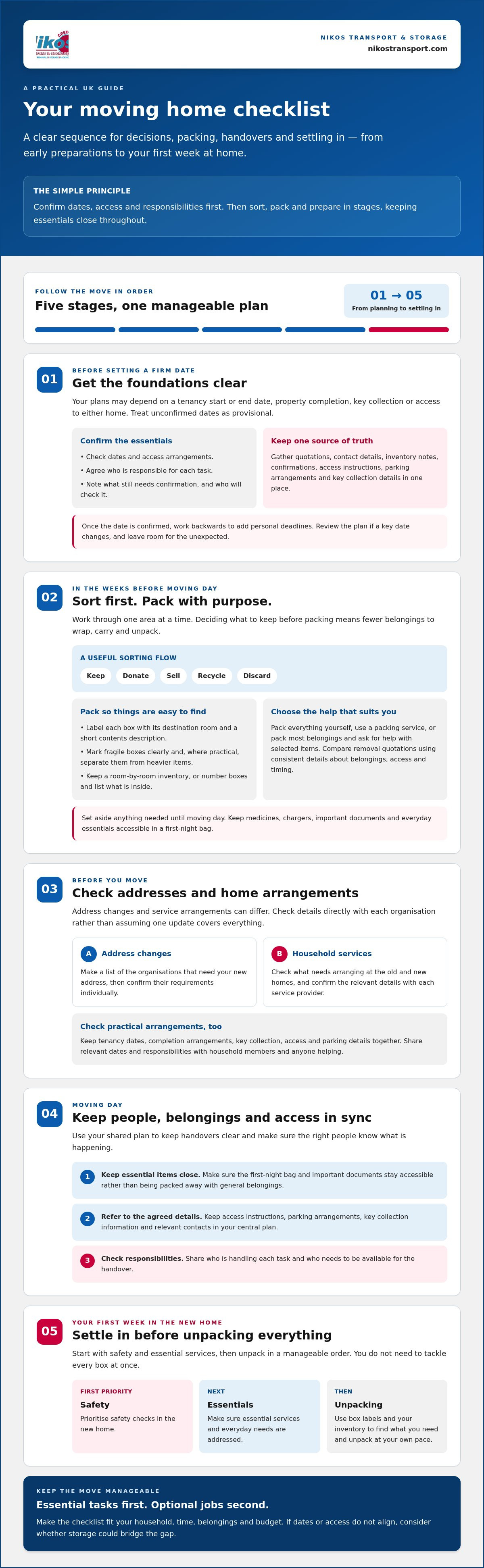
Moving day checklist: keep people, belongings and access in sync
A clear sequence helps the day run more smoothly. Decide who will meet the removals team or helpers, who will manage access and keys, and who will look after children, pets or essential belongings. Share the agreed arrival plan and contact details with everyone involved, so people aren’t left guessing if timings change.
Keep important documents, valuables and essential medicines with a responsible adult, not in the items being loaded. Do the same with your first-night essentials bag. Before leaving the old home, walk through each room and check cupboards, loft spaces and outbuildings. Record meter readings or property condition details where relevant, and follow any agreed handover requirements.
Before the removals team or helpers arrive
Clear walkways and make sure boxes are easy to identify. Point out items needing careful handling, such as fragile belongings, and confirm which boxes should be loaded last if you’ll need them soon after arrival. Keep paperwork and essentials separate from items for transport. A visible note or designated area can help prevent them being moved by mistake.
- Confirm access instructions, key arrangements and the agreed arrival plan.
- Keep a contact number handy for the person coordinating the move.
- Make sure everyone knows who is overseeing loading and answering questions.
At the new home: check delivery and access
Before unloading begins, confirm that you can access the property and know where the keys are. Direct boxes to their labelled rooms as they come in. This helps avoid extra lifting and makes essentials easier to find. Use your inventory to check that belongings have arrived. Clear labelling and simple instructions give everyone a shared reference point if a box needs locating.
If you notice visible damage or another concern, make a note and raise it promptly through the removals provider’s agreed process. Check that essential rooms are accessible and that the services you need are available before unpacking in earnest. You don’t need to open every box straight away; focus first on what will make the home usable and safe.
A well-organised moving home checklist can keep responsibilities, access and final checks in view, even as the day gets busy. If you’re arranging help with transport, you can enquire about UK removals and confirm the details that matter for your move.
After moving home: the first-week checklist and practical next steps
You don’t need to unpack every box in the first few days. Focus on making the home safe and comfortable, then work through the outstanding practical jobs at a steady pace. A few essentials in place can make a bigger difference than a perfectly organised spare room.
Settle in safely and make the home functional
Before you get absorbed in unpacking, locate the water stopcock, electricity meter and fuse box, and find out how to switch off the gas if the property has it. Check that smoke alarms are present and appear to be working, and keep exits and hallways clear of boxes. If you’re unsure about an appliance or connection, don’t guess; arrange help from a suitably qualified person.
Unpack in order of immediate need. Start with bedding, toiletries, basic kitchen items and anything children need for their usual routines. Set up a place to charge phones and keep essential medicines accessible. Then pause. Getting enough rest helps you make better decisions about the remaining boxes, so there’s no need to turn the first night into an unpacking marathon.
Next, check that essential services are working as expected and note any issues that need follow-up. If an appointment is required for an appliance or service, record the booking details somewhere easy to find.
Finish address updates and review what remains
Return to your address-change list and contact any organisations you haven’t yet updated. Check the relevant official guidance for public-body records and requirements that apply to you; don’t assume one address change automatically updates another. Keep useful confirmation messages, account references and appointment details together, so you can resolve queries without searching through boxes.
Review bills, service appointments and any promises made during the move. Check that household accounts show the correct property details and note anything still awaiting action. If storage helped bridge a gap between moving dates, confirm the arrangements for retrieving your belongings and add that task to your plan.
For broader preparation advice, read this practical house removals guide. If you’d like support with domestic removals, packing or storage, you can discuss your move with Nikos Transport & Storage.
Take your next step towards a calmer move
A well-organised moving home checklist helps you tackle the move in sequence: confirm the important dates, prepare belongings and address updates, then keep access and essentials clear on moving day. Once you arrive, focus on safety, essential services and the tasks that help your household settle in, rather than trying to unpack everything at once.
You can adapt the plan to your household and decide where extra help would make a difference. Nikos Transport & Storage offers UK domestic removals, packing and storage. These services may help if you’d like support with the physical work or need to plan around a gap between move dates.
If you’re considering help with your move, contact Nikos Transport & Storage to discuss your UK move. Take it one step at a time, and you’ll be well on your way to making your new house feel like home.
Frequently Asked Questions
When should I start using a moving home checklist?
Start as soon as a move looks likely, then turn confirmed dates into deadlines when you have them. Early planning gives you time to check dependencies such as tenancy dates, completion arrangements and key collection before booking help or making firm plans. Keep the moving home checklist flexible: mark uncertain dates clearly and revisit tasks if they change. Add jobs in stages, from sorting belongings to final handover checks.
What should I do first when moving house?
First, establish the key dates and what they depend on. Check when you’re expected to leave your current home, when you can access the new one and how you’ll collect the keys. Note anything that still needs confirmation, then decide who will handle each essential task. Once the timing is clearer, you can arrange transport or packing help, sort belongings and set reminders without building your plan around assumptions.
How do I remember to change my address when I move?
Make one list of organisations and people to notify, then keep it somewhere you can update as you go. Include banks, insurers, your employer, relevant public bodies, healthcare providers and regular services. Record when you contacted each one and save useful confirmations. Check official guidance for public-body records and any requirements that apply to you. Don’t assume that notifying one organisation, or arranging post redirection, updates other accounts automatically.
What should I pack in a moving day essentials box?
Pack items you’ll need before the rest of your belongings are unpacked, and keep the bag or box with a responsible adult rather than loading it for transport. Include essential medicines, important documents, phone chargers, toiletries, a change of clothes and basic items for making a drink or simple meal. Add bedding and children’s necessities if relevant. Keep valuables and key paperwork secure and easy to reach throughout the move.
Should I hire a removals company or move myself?
Choose the option that best fits the size of your move, access arrangements, available time and the help you can rely on. Moving yourself may suit a smaller move if you can safely organise transport and lifting. A removals company can take on transport, while packing help is another option if preparing boxes feels demanding. Compare what’s included, check access requirements and ask what insurance cover applies, including to belongings you pack yourself.
What should I do on the first night in my new home?
Focus on safety, essential services and rest rather than unpacking everything. Make sure you can enter and secure the property, keep exits clear, and locate essential shut-offs such as the water stopcock and fuse box. Check that smoke alarms are present and appear to work. Unpack bedding, toiletries, medicines, chargers and basic kitchen items first. If an appliance or connection needs attention, arrange qualified help instead of guessing.


