

A regular route is most useful when collection, customs paperwork and delivery all fit your shipment. Weekly transport from the UK to Greece brings these moving parts together, with the right plan depending on what you’re sending and where it needs to go.
It’s natural to want clear answers about customs before arranging a shipment. The paperwork and process can feel like the hardest part, so this guide explains how customs procedures fit into UK-Greece transport, alongside the choices between express and economy services.
You’ll also learn what affects the quote, how collections and deliveries work, and when freight services may suit larger or business shipments. By the end, you’ll have a clearer picture of the steps involved and the details to prepare when planning transport to Greece.
Key Takeaways
- Plan collection and destination details together so the route suits your shipment from pickup to delivery.
- Compare express and economy options by balancing timing needs with the shipment’s size and requirements.
- Prepare customs information carefully, as accurate shipment details help support the cross-border process.
- Consider freight services for larger or business consignments, and choose a transport plan that fits the load.
UK-wide collections and delivery throughout Greece
A weekly route makes it easier to plan collection and delivery, wherever your goods start in the UK. Share the collection postcode and full Greek destination address when arranging transport. Whether the destination is a city or a village, include the property name or number, street, town and postcode. Accurate addresses help align collection and final delivery arrangements.
To arrange transport, provide both postcodes, contact details, an item description, the shipment’s size and your preferred collection date. Keep your booking reference and use it to follow any updates provided for the consignment.
Prepare for collection by grouping items and labelling each package with its destination and recipient. For example, mark boxes going to an Athens flat separately from items for a Thessaloniki office. Give the driver clear access instructions, such as a flat number, entry code or loading point. At delivery, arrange for someone to receive the goods and check the packages against the shipment details.
- Before collection: confirm the UK postcode, access arrangements and contact number.
- For the load: list the contents clearly and note any unusually large or fragile pieces.
- For delivery: provide the Greek address in full and identify a recipient.
Insurance cover depends on the policy, declared contents, packing, valuation and exclusions; read those terms before dispatch. Restrictions can apply to particular goods, so describe each item accurately and establish whether it can travel before packing. Common practical risks include damage from poor packaging, delays caused by incomplete addresses, and missed handovers when nobody is available. Protect fragile contents with suitable packing, keep essential documents accessible, and make sure the sender and recipient can be reached throughout the agreed collection and delivery process.
Express and economy shipping options
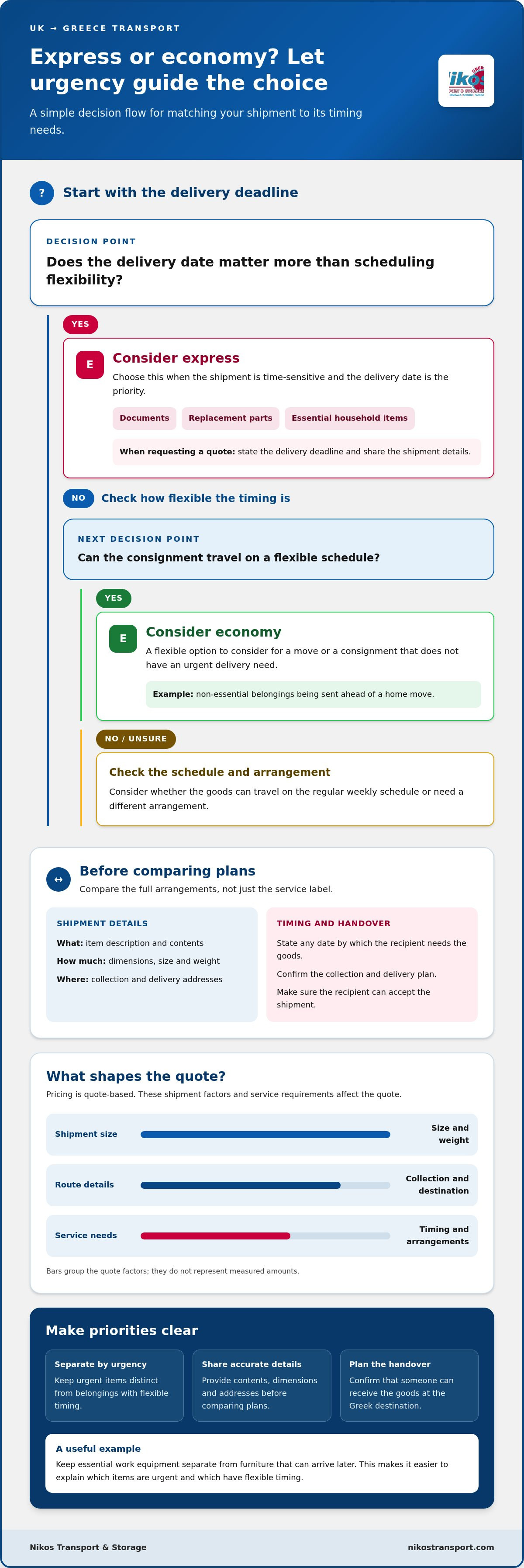
Choose express when the delivery date matters more than scheduling flexibility. It suits time-sensitive documents, replacement parts or essential household items. Economy transport can suit a move or consignment with flexible timing. The right choice depends on urgency, shipment size and the delivery arrangements at the Greek destination.
Before arranging transport, list what you’re sending, its dimensions and the collection and delivery addresses. Then note any date by which the recipient needs the goods. A small box of work equipment needed for a planned installation has different priorities from several boxes being sent ahead of a home move. Clear details help shape a transport plan around your shipment.
- Express: prioritise a time-sensitive shipment and share its deadline when requesting a quote.
- Economy: consider this for flexible consignments, such as non-essential belongings moving to a new home.
- Either option: provide accurate dimensions, contents and addresses before comparing plans.
Pricing is quote-based. The shipment’s size, weight, collection location, destination and service requirements all affect the quote. Compare the full arrangements, not just the service label. Confirm the collection and delivery plan for your shipment, and make sure the recipient can accept the goods. A missed handover can disrupt even a carefully planned schedule.
For weekly transport, consider whether your goods can travel on the regular schedule or need a different arrangement. Separate urgent items from flexible belongings before booking. For example, keep essential work equipment distinct from furniture that can arrive later. This makes your priorities clear and avoids treating every item as equally urgent.
Prepare a concise shipment list, confirm the addresses and state your timing needs when requesting a quote. These details make it easier to compare a suitable option for your UK-Greece journey. You can explore UK-to-Greece transport options as you plan the shipment.
Post-Brexit customs procedures
Customs paperwork describes what a shipment contains, who sends it and who receives it. For a UK-to-Greece consignment, prepare accurate details before collection. The information should match the goods packed, not just the broad purpose of the shipment. A box described as “personal items”, for example, needs a clearer contents description.
To prepare the paperwork, gather the sender’s and recipient’s names, addresses and contact details. Make an itemised list that gives each type of item, its quantity and value. State whether the goods are personal belongings, gifts or items for sale. Keep descriptions specific: “used books and kitchen utensils” tells more than “household goods”.
The documents and information needed depend on the shipment and its purpose. Have a clear contents list and the sender’s and recipient’s details ready. A commercial invoice may be relevant for goods being sold. Include supporting details that explain the shipment, such as a sale or relocation, where applicable, and keep copies with your booking information.
- Describe the contents: list separate categories rather than using a general label.
- Explain the purpose: distinguish a sale from personal belongings or a gift.
- Check consistency: make sure the written details match the packed items.
Before sealing the boxes, compare the contents list with the actual shipment. If a carton contains a kettle, books and clothing, list those categories instead of writing “miscellaneous”. Separate items with different purposes in the paperwork so the recipient can understand each entry. Accurate descriptions also help identify missing details before the consignment moves.
Restricted or sensitive goods need particular care. Don’t assume an item can travel simply because it is legal to own in the UK. Identify the goods precisely and consider whether their nature affects the paperwork or carriage. Keep invoices or other relevant supporting records available for commercial consignments. A clear account of the shipment helps reduce avoidable questions during customs processing.
UK-Greece freight and cargo services
Road transport suits bulky goods and consignments moving between collection and delivery addresses. A weekly plan can group compatible loads or arrange space for a larger consignment. Sea freight can suit substantial cargo with flexible timing, whilst air freight prioritises speed for suitable shipments. Courier services are generally designed for parcels and smaller items.
Weekly UK-to-Greece transport may involve scheduled road movements, shared-load freight or a dedicated load. The right arrangement depends on volume, dimensions, delivery timing and how goods need handling. A few cartons could travel as part of a shared consignment; a business shipment of several pallets needs a plan based on the full load.
Goods commonly considered for freight include boxed stock, office equipment, furniture and household belongings. The shipment’s dimensions and total volume matter alongside its weight. Pallets can help organise consistent, stackable goods, while irregular furniture may need measurements and careful loading arrangements. Describe fragile or unusually shaped items before booking.
- Small consignments: group cartons by recipient and provide their dimensions.
- Palletised cargo: state the number of pallets, their measurements and contents.
- Bulky items: measure each piece and explain access or handling needs.
To select a suitable method, prepare a cargo summary first. Record the collection and delivery locations, contents, dimensions, total volume and preferred timing. Then compare whether shared road space, a dedicated road load, sea freight, air freight or courier delivery fits the shipment. Air freight and courier services are distinct alternatives, not the same as road cargo. Avoid assuming one method suits every item; size, urgency and handling needs shape the choice.
For a shipment of household belongings or business cargo, arrange UK-to-Greece transport around its load and destination details.
Nikos Transport & Storage: Transport To/From Greece
Nikos Transport & Storage provides transport between the UK and Greece for household belongings and business consignments. Turn to its Greek Service when you need help moving goods along this route, whether you’re planning a home move or sending cargo. Share the shipment details, collection address and Greek destination to help shape a practical plan around your requirements.
If your move involves a gap between leaving one property and receiving your belongings, storage can help bridge that transition. UK Removals can also support a move within Britain before an international journey. These services are useful when transport to Greece is part of a wider relocation rather than a standalone parcel delivery.
For a considered plan, bring together your destination, shipment contents and preferred timing. You’re welcome to contact Nikos Transport & Storage or visit nikostransport.com to discuss transport to Greece.
Make your next move easier to plan
Turn your plans into a practical shipment brief by deciding which belongings or goods need to travel, what should remain accessible, and how delivery fits around your wider move. A clear outline helps you discuss weekly transport from the UK to Greece with the right priorities in mind, rather than treating every item as equally urgent.
Nikos Transport & Storage offers transport to and from Greece, transport to Cyprus and storage. These services can support different parts of an international move, including plans involving another destination or a gap between collection and delivery. Share the essentials of your journey and shipment to begin planning.
Contact Nikos Transport & Storage to discuss your plans. A considered first step can make the journey ahead feel more manageable.
Frequently Asked Questions
What about customs?
Customs paperwork includes a declaration describing the consignment and its purpose. Identify personal belongings as such, while goods intended for sale need commercial details. Keep the sender and recipient information, contents and supporting paperwork consistent, as differences can prompt questions during processing. Customs clearance is outside the transporter’s control, so no clearance timescale can be guaranteed. Keep invoices for goods being sold with your shipment records.
When is my shipment scheduled and how long does it take?
Road freight groupage from UK depots starts every Saturday and arrives at the Aspropyrgos (Athens) depot within 7 days. That is the depot arrival schedule, not a promise of a home-delivery date. Arrange collection around the departure and have the shipment ready with its paperwork before handover. Keep your booking reference available and agree who will receive the goods at the Greek end.
How long does weekly transport from the UK to Greece take?
For weekly transport from the UK to Greece, road freight groupage arrives at the Aspropyrgos (Athens) depot within 7 days after departure every Saturday. This period ends at the depot, not at every Greek address. The final journey depends on the delivery arrangement, while customs clearance has no guaranteed timeline. Plan around depot arrival, then allow time to coordinate the onward handover with the recipient.
Which UK cities and Greek destinations are served?
Collections are arranged across the UK, with delivery available to cities throughout mainland Greece and its islands. The route and handover point depend on the addresses and delivery arrangement. For an island destination, include the island and locality in the address so the final leg can be planned clearly. Provide full collection and delivery details when arranging transport, including any access instructions at either end.
What are the customs rules for transporting goods from the UK to Greece after Brexit?
UK-to-Greece shipments need customs declarations and information describing the goods for cross-border processing. The paperwork should reflect the shipment’s purpose, such as a personal relocation or a sale, and match the actual contents. Keep relevant commercial records with the consignment. Nikos Transport & Storage provides a Customs Declaration service to help prepare the paperwork, but customs clearance timing is outside the transporter’s control and cannot be guaranteed.


