

What if protecting your belongings abroad starts with choosing the right box, rather than simply packing more into it? Packing boxes for moving abroad can feel uncertain when you’re weighing up box strength, sizes and materials, while also thinking about fragile items and how everything will be identified at the other end.
Those concerns are understandable. An international move involves more than getting belongings into boxes: thoughtful packing and clear labelling help keep items protected, identifiable and easier to unpack. With a practical plan, you can prepare your household goods in a sensible order and reduce the guesswork.
This guide explains how to choose boxes and packing materials, protect delicate belongings, organise and label each box, and prepare your shipment for an overseas move. You’ll also learn when professional packing support can make the process more manageable. At Nikos Transport & Storage, our packing service works alongside international removals and transport, bringing care and organisation to a demanding part of moving abroad.
Key Takeaways
- Make packing boxes for moving abroad more manageable with a clear method that keeps belongings protected and easy to identify.
- Match box size and protective materials to the contents, while keeping each box safe and manageable to lift.
- Pack room by room and group similar belongings to make unpacking at your destination more straightforward.
- Use destination-room labels and a numbered inventory to track boxes and decide what to unpack first.
- Check your boxes and labels before the move, then decide whether to pack independently or use professional support.
Packing boxes for moving abroad: what makes international packing different?
A simple, repeatable packing method can make an overseas move feel more manageable. Think beyond getting belongings into boxes: each one needs to protect its contents, remain identifiable and fit into an organised shipment. The goal is a securely packed, clearly labelled container that can be handled and unpacked without guesswork.
Compared with a local move, an overseas removal can involve boxes being handled at several stages as the shipment is prepared, transported and delivered. The broader process of Relocation includes more than the journey itself, so consistent packing and labelling can help keep household contents organised along the way.
Preparation matters before a box is sealed: once it’s closed, it’s harder to adjust the contents, protection or information needed to identify it.
How is packing for an overseas move different from packing for a local move?
For a local move, you may be able to move items directly from one home to another. An international removal can involve handovers and handling at different stages, so pack each box to hold its contents securely and label it so its purpose stays clear. A short contents summary and destination room can distinguish kitchen items from bedroom belongings. A priority note can also flag what you’ll want to unpack early.
There isn’t one packing method for every shipment. A box of folded clothes has different needs from one containing glassware, books or mixed household items. Consider what’s inside, how the items sit together and how easily they could shift. Aim to balance protection with safe, manageable lifting.
What should you decide before you start filling boxes?
Start by sorting belongings rather than packing everything by default. Separate what you’re taking from what you’ll leave behind, then group similar belongings together. This gives you a clearer idea of what needs packing and helps prevent you from filling boxes with items you don’t intend to move.
Set aside essentials you’ll need before departure and immediately after arrival. Keep them separate from the shipment so everyday necessities aren’t buried among boxes. Then plan your packing around the move schedule, allowing time to sort, pack and label. A room-by-room plan makes it easier to see what’s done and what still needs attention.
- Decide what is moving before choosing what goes into each box.
- Keep arrival essentials accessible and separate from packed household goods.
- Use your move schedule to pace the work and keep track of progress.
Once you’ve made these decisions, you’ll have a clearer basis for choosing suitable boxes and materials. A considered start makes the next steps easier: protecting belongings, keeping each box manageable and preparing an organised shipment that’s easier to identify at its destination.
Choose packing boxes and materials that protect your belongings
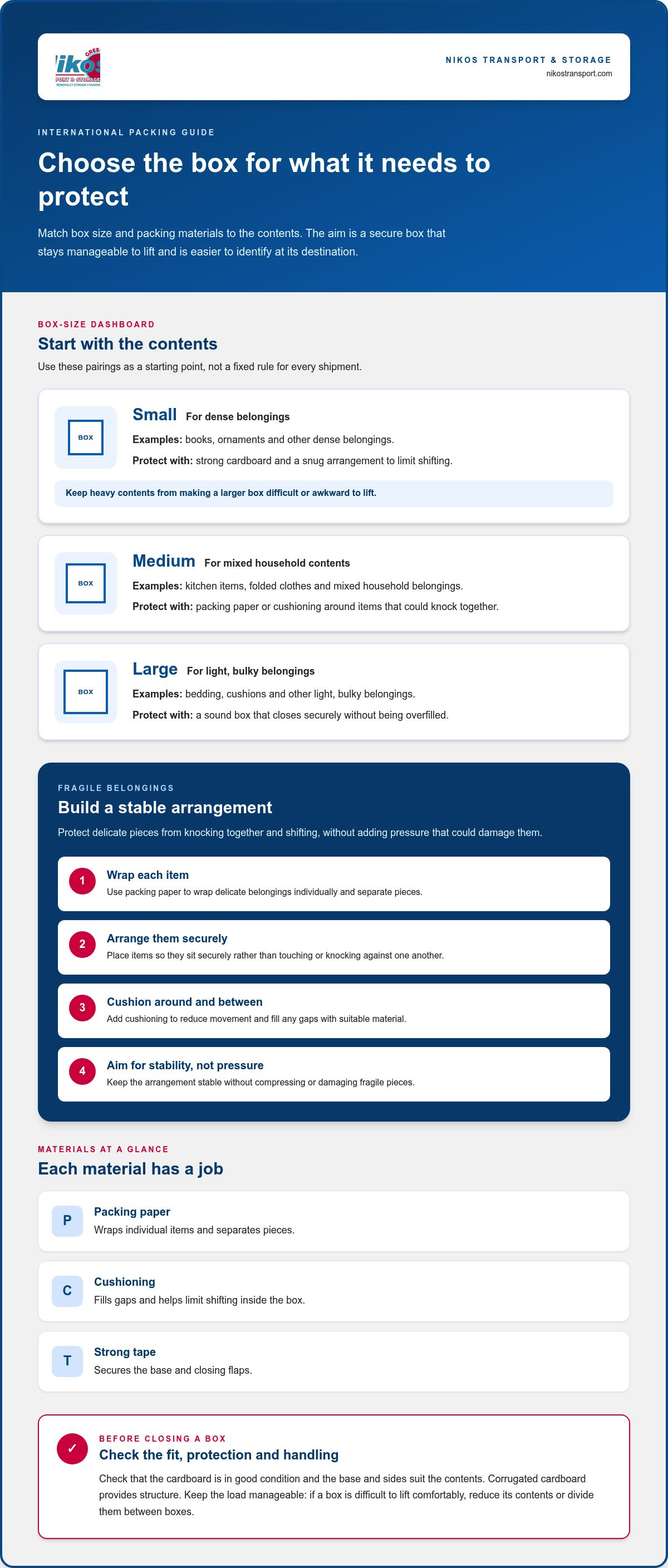
When packing boxes for moving abroad, choose each box for what it needs to protect, not simply how much it can hold. A suitable box should contain its contents securely and remain manageable to lift. The right combination depends on the belongings inside, so use the table as a starting point rather than a fixed rule for every shipment.
| Box size | Examples of belongings | Protection to consider |
|---|---|---|
| Small | Books, ornaments or other dense belongings | Strong cardboard and a snug arrangement to limit shifting |
| Medium | Kitchen items, folded clothes or mixed household belongings | Packing paper or cushioning around items that could knock together |
| Large | Bedding, cushions or other light, bulky belongings | A sound box that closes securely without being overfilled |
Which box size works for different household belongings?
Small boxes are useful for dense items such as books, which can quickly make a larger box heavy and awkward. Larger boxes are better suited to lighter, bulkier belongings such as bedding. If a box is difficult to lift comfortably, reduce its contents or divide them between boxes. Keeping the load manageable makes it easier to handle safely.
Check that the cardboard is in good condition and that the base and sides are suitable for the contents. Corrugated cardboard provides structure, while strong tape helps secure the seams and base. Avoid relying on one box size for every item or packing a box so full that it won’t close properly.
Which packing materials help protect fragile items?
Wrap delicate belongings individually in packing paper before placing them in the box. Arrange them so they sit securely rather than touching or knocking against one another. Add cushioning around and between items to reduce movement, then fill any gaps with suitable material. The aim is a stable arrangement, not pressure that could compress or damage fragile pieces.
- Packing paper: Wraps individual items and separates pieces.
- Cushioning: Helps fill gaps and limit shifting inside the box.
- Strong tape: Secures the base and closing flaps.
If your move involves bringing personal belongings into Great Britain, the Transfer of Residence to Great Britain guidance explains the relevant process. This is separate from choosing protective materials for a move out of the UK.
Good materials and careful packing work together. If you’d prefer experienced help preparing household belongings, Nikos Transport & Storage offers a professional packing service alongside international removals and transport.
How to pack boxes for moving abroad: a step-by-step method
A steady routine makes it easier to pack belongings carefully without losing track of what’s in each box. Work through one room at a time and group similar items together, so the contents make sense when you unpack.
- Sort what you’re taking. Separate belongings for the move from anything you’re leaving behind. Keep arrival essentials aside so they don’t get packed by mistake.
- Group items by room and type. Pack similar belongings together, such as kitchen utensils with other kitchen items. This makes boxes practical to unpack and helps avoid confusing mixed contents.
- Prepare the box. Check that it’s in sound condition, then secure the base with packing tape. Choose a size that will remain manageable once filled.
- Build a stable base. Place heavier, sturdy items at the bottom and lighter belongings above them. Distribute the contents evenly rather than letting weight collect on one side.
- Wrap and arrange delicate items. Wrap fragile belongings individually and separate them with suitable cushioning. Position them so they can’t shift freely, and avoid putting heavy items on top.
- Fill gaps carefully. Add cushioning where contents could move, but don’t force material into the box or compress delicate items. The arrangement should feel secure without being tightly squeezed.
- Check, label and seal. Confirm the contents sit below the flaps, the box closes neatly and its weight is comfortable to handle. Add a clear label, then tape the seams closed.
How should you pack fragile and breakable belongings?
Wrap each item separately, giving extra attention to pieces that could chip, crack or scratch. Arrange them with cushioning between and around them, keeping fragile belongings together where practical so they can be identified as a group. Before sealing, gently check whether anything shifts when the box is moved. If it does, adjust the arrangement and add cushioning rather than pressing the contents down.
How can you seal and check each box before the move?
The flaps should meet neatly without bulging, and the contents shouldn’t press against them. Secure the seams with packing tape, including the base, and don’t leave loose openings. Inspect the box for weak or damaged areas, then lift it carefully to judge whether it remains manageable. If it feels awkward or overly heavy, redistribute the contents before adding it to the shipment.
Pack securely, minimise movement and keep boxes manageable. This simple check helps keep each box organised for handling and makes your packing easier to review as the move progresses.
Label and organise moving boxes for an international shipment
Clear, consistent labels make it easier to identify boxes throughout an international move and find what you need at the other end. For each box, note its destination room and add a short description of the contents, such as “Kitchen: mugs and plates”. Use the same format across the shipment so labels are quick to scan and useful when you’re unpacking.
There’s no need for a complicated labelling system. Keep your writing readable and put it somewhere easy to see. Add a handling note, such as “Fragile”, where relevant, and use the same wording consistently. Avoid putting personal or sensitive details on the outside of boxes. A room name and brief contents summary are usually more useful than a long list.
What information should go on a moving box label?
A practical label answers three questions: where should the box go, what does it broadly contain, and does it need particular care? For example, “Bedroom: bedding” identifies both the room and contents, while “Fragile” can highlight delicate items. Keep the description concise and make any handling note clear rather than relying on unfamiliar symbols or a colour code alone.
How can an inventory make arrival and unpacking easier?
Give each box a unique number and record it alongside the room and a brief contents summary in a separate inventory. Keep the list somewhere accessible, such as a secure digital note or document, rather than relying only on information written on the boxes. This helps you check what’s been packed and locate a particular item without opening several boxes.
You can also mark boxes containing arrival essentials for early access. Keep the selection focused so these boxes stay manageable, and note their numbers in your inventory. If some belongings will be stored before you can unpack them, plan how you’ll organise and access them; see the UK storage guide for moving abroad for related planning advice.
- Use a consistent label format: room, brief contents, and a handling note if needed.
- Number boxes clearly and match each number to your private inventory.
- Identify priority boxes so you can find essentials without searching through the shipment.
Labelling is one part of preparing for an overseas move. Organise your packing steps around your move schedule, and keep labels and the inventory together so they’re easy to refer to. If you’d like support preparing and organising your belongings, explore our professional packing service.
Prepare your packed boxes and plan the next step for moving abroad
Before your boxes join the shipment, check that each one is ready to be handled and identified. A final review can catch loose tape, unclear labels or inventory details that no longer match the contents. It also gives you a useful handover point between packing and organising transport or relevant shipment paperwork.
- Check that every box is securely sealed and in sound condition.
- Make sure labels are readable and show the destination room and a brief contents summary.
- Update your inventory so its box numbers and contents match the packed shipment.
- Keep arrival essentials accessible and identify them clearly in your list.
When might professional packing support be useful?
Packing independently gives you control over the pace and how belongings are grouped. It can work well when you have enough time to sort, wrap, label and check everything yourself. A large volume of belongings, a busy schedule or many fragile items can make packing a substantial task. In those circumstances, professional support can bring structure and care to the preparation.
Nikos Transport & Storage offers packing alongside removal services, connecting the care taken with your belongings to the wider international move. You can decide whether to pack everything yourself or use support for the parts that feel most demanding. The right approach depends on your belongings, schedule and how much help you’d find useful.
What should you do once your boxes are ready?
Bring your labelled boxes and current inventory together as part of your move preparation. Keep the inventory accessible and use it to communicate a clear overview of the packed belongings as you organise transport and any relevant shipment paperwork. Nikos Transport & Storage also provides customs declaration support as part of its international moving services.
Some preparation applies to both domestic and international moves, such as organising belongings and planning what you’ll need first. A room-by-room packing plan, clear labels and an up-to-date inventory help keep those steps organised. The additional details for an overseas shipment can sit alongside your packing plan.
Packing boxes for moving abroad is easier to manage when each box is protected, identifiable and accounted for. If you’d like packing and transport support as part of your move, explore packing and international removal support.
Make your overseas move feel more organised
Careful packing boxes for moving abroad starts with a simple plan: choose boxes that suit their contents, cushion fragile belongings and keep every load manageable. Pack room by room, then use clear labels and an up-to-date inventory to make boxes easier to track and unpack.
You can manage the packing yourself or choose professional support if time, volume or delicate belongings make the task more demanding. Nikos Transport & Storage offers packing alongside international removals and transport, helping bring care and organisation to your move.
For practical support with the next stage, explore packing and international removal support. With a clear plan and the right help for your needs, you can take the next steps with greater confidence.
Frequently Asked Questions
How do you pack boxes for moving abroad?
Pack one room at a time, grouping similar belongings so they’re easier to identify and unpack. Choose a box that suits the contents, place heavier items at the bottom and wrap fragile pieces individually with cushioning between them. Fill gaps to limit movement without compressing delicate items. Keep each box manageable to lift, then check it closes neatly, tape the seams securely and add a clear label.
What is the best type of box for moving overseas?
The best box is one in sound condition that suits its contents and can be lifted safely once packed. Corrugated cardboard boxes are a practical option for household belongings, but the size should match the load: use smaller boxes for dense items such as books and larger ones for lighter, bulky belongings. Avoid damaged or overfilled boxes, and don’t assume one size works for every item.
How should I pack fragile items for an international move?
Wrap fragile items individually and arrange them so they can’t knock against one another. Use suitable cushioning between pieces and around the sides of the box, then fill empty spaces to reduce movement. Don’t compress delicate items to make everything fit. Keep breakables together where practical, and mark the box clearly with a handling note so its contents are easy to recognise during unpacking.
What should I write on boxes when moving abroad?
Write the destination room and a brief contents description on each box, such as “Kitchen: utensils”. Add a clear handling note, such as “Fragile”, when it’s useful. Keep labels readable and use a consistent format throughout the shipment. A concise description is easier to scan than a long contents list. Avoid adding unnecessary personal or sensitive information to the outside of boxes.
Can I use second-hand boxes for an international move?
Yes, second-hand boxes can be suitable if they’re clean, dry and structurally sound. Check for torn corners, crushed sides, weak seams or signs of damp, and don’t reuse a box that feels soft or unstable. Make sure the base can be secured properly and the flaps close neatly. If a box has become worn or damaged, choose a sound alternative to help protect its contents.
Should I pack everything myself or use a professional packing service?
You can pack independently if you have the time and are comfortable sorting, wrapping, labelling and checking each box. Professional support may be useful if you have a large volume of belongings, limited time or fragile items that make packing more demanding. Nikos Transport & Storage offers packing alongside international removals and transport, so packing support can form part of your wider move plan.
Do I need an inventory for boxes when moving abroad?
An inventory is a useful way to track boxes and make unpacking more organised. Number each box, then record its destination room and a brief contents summary in a separate list. Mark priority boxes so you can find essentials sooner, and update the list if contents change during packing. Keep the inventory accessible and use it alongside any shipment paperwork relevant to your move.


