

A self-storage unit may seem like the simplest choice, but it is not always the easiest to manage over a longer period. The right long term storage UK warehouse solution depends on what you are storing, how long it needs to stay there and how you will retrieve it. Belongings waiting for a move and business stock with changing needs call for different plans.
It is understandable to feel unsure about how to prepare, organise and protect items you will not need straight away. You will also want storage to fit around a move or relocation, rather than add another complication. A clear inventory, suitable packing and a retrieval plan can make a long stay easier to manage.
This guide explains how warehouse storage works, how it compares with self-storage and what to consider for personal belongings or business goods. It covers preparation, organisation and retrieval, including how storage can sit alongside removals, packing and transport. Nikos Transport & Storage offers flexible short- and long-term storage at UK warehouse facilities.
Key Takeaways
- Moving dates, an overseas relocation, changing space needs or business stock can all make long-term warehouse storage a practical option.
- Plan the storage journey from the outset: list your goods, estimate how long they will be stored and consider when you may need them back.
- Compare access, handling and organisation to decide whether a long term storage UK warehouse arrangement or self-storage better suits your needs.
- Note the approximate volume and flag fragile, bulky or business-critical items to help shape an organised storage plan.
- Storage can be planned alongside removals, packing and transport between the UK, Greece and Cyprus.
Long-term storage in a UK warehouse: when does it make sense?
Long-term warehouse storage means keeping goods in a warehouse for an extended period rather than storing them at home or using them straight away. Warehouses hold goods until they are needed or moved on. You can read more about what a warehouse is and its role in the supply chain. When choosing storage, consider the items, expected duration, handling needs and how you plan to retrieve them.
A long term storage UK warehouse arrangement can help when a temporary gap between homes lasts longer than expected, or when keeping everything at home is not practical. Thinking through the reason for storage early helps you decide what to put away, how to organise it and which items you may need back first.
What can long-term warehouse storage help you manage?
Household furniture and personal belongings may need a place to stay when you have to leave one home before the next is ready. Renovations or changing space needs can also make it difficult to keep everything at home. Business goods have different requirements: stock may need to be held during an operational change or while a business makes room for a new way of working.
Storage can also bridge a gap during an overseas move. For example, if you are relocating from the UK to Greece or Cyprus and some belongings will not travel with you straight away, storage can form part of the wider move plan.
When should you consider storing goods for longer?
Consider storage when moving dates are uncertain, you are spending an extended period abroad or you need to clear space without parting with your belongings. If dates shift, a plan based on the likely storage duration and retrieval needs can help you avoid treating every item as an urgent move. For more relocation planning, see our guide to storage in the UK while moving abroad.
For a business, longer storage can help hold stock between operational changes, such as a change in premises or a shift in how goods are managed. Before arranging storage, identify which items need to be retrieved first and when you expect to need them. Nikos Transport & Storage offers flexible short- and long-term storage alongside UK removals, packing and transport between the UK, Greece and Cyprus.
How long-term warehouse storage works, from preparation to retrieval
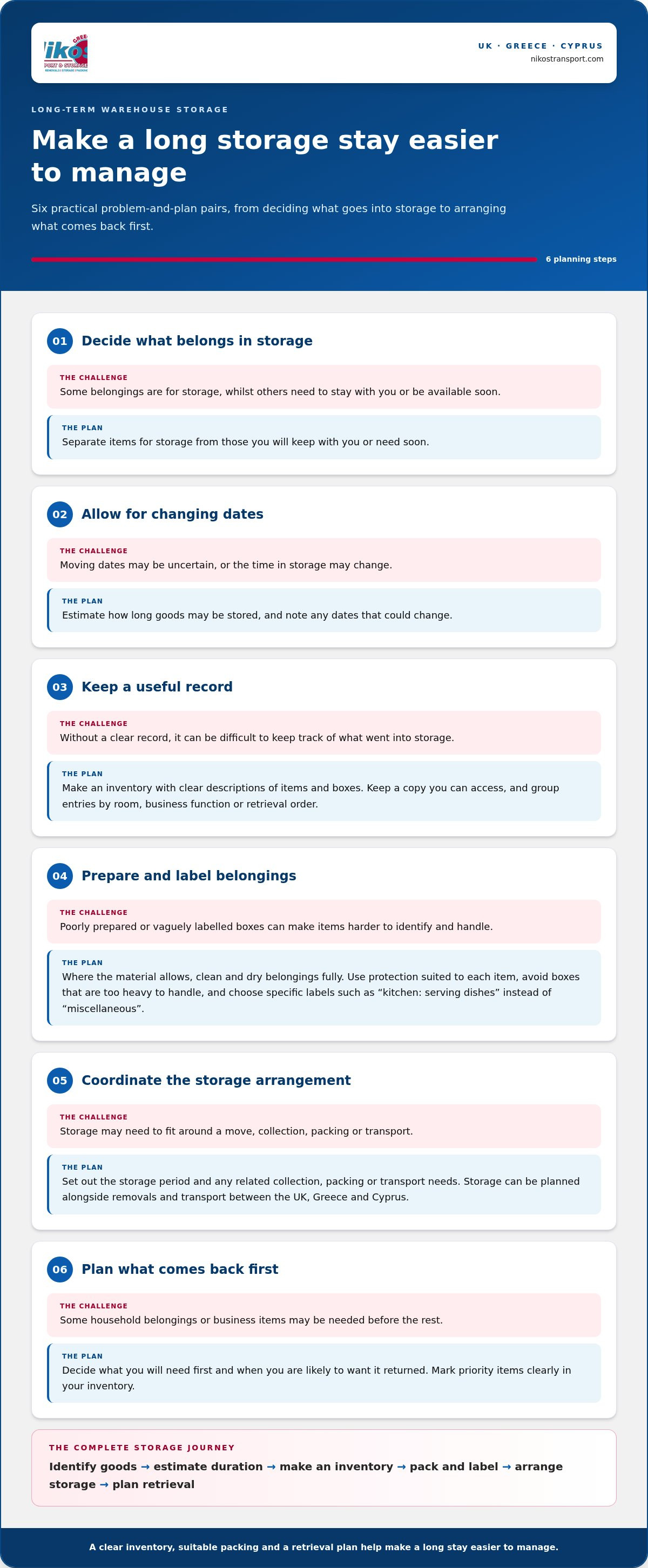
A clear plan makes an extended storage period easier to manage, especially if your moving date or business needs change. The long term storage UK warehouse process starts with deciding what to store and continues through to arranging its return. Taking each step in order helps you keep track of what is stored and when you may need it.
- Identify the goods: Separate items for storage from those you will keep with you or need soon.
- Estimate the duration: Note your expected storage period and any dates that may change.
- Prepare an inventory: Record what you are storing, with clear descriptions of individual items and boxes.
- Pack and label: Choose protection suited to each item and label boxes so their contents are easy to identify.
- Arrange storage: Set out the storage period and any related collection, packing or transport needs.
- Plan retrieval: Decide what you will need first and when you are likely to want items returned.
How should you prepare belongings for an extended stay?
Where the material allows, clean and dry belongings fully before packing them. Use protective packing suited to the item, and avoid making boxes so heavy that they are difficult to handle. Label each box with a useful description, such as “kitchen: serving dishes” or “office: archived files”, rather than a vague label like “miscellaneous”. Keep items you may need soon separate from those intended to stay in storage. For more advice, read our practical guide to packing boxes for moving abroad.
Why do inventories and retrieval plans matter?
An inventory gives you a record of what went into storage and helps you find it later. Keep a copy somewhere you can access, and group entries by room, business function or retrieval order. If you may need work equipment or particular household items before the rest, mark them clearly in your list and plan when you will retrieve them.
Warehouse storage is part of a wider UK logistics sector. The UK Warehousing Association provides information about the warehousing industry, offering useful context as you plan how goods will be stored and moved. For storage alongside removals and packing, explore Nikos Transport & Storage’s storage service.
Warehouse storage vs self-storage: which suits your long-term needs?
The best fit depends on how often you will need your goods, how much you are storing and whether storage needs to fit into a move or transport plan. Self-storage commonly means renting a unit and organising its contents yourself. Warehouse storage is arranged as part of a storage service, which can be useful when you do not need to visit and manage the goods regularly. Neither format is automatically safer, cheaper or more convenient: compare them against your priorities.
| Consideration | Self-storage | Warehouse storage |
|---|---|---|
| Control of access | You manage your unit and may prefer this if you expect to visit or retrieve items regularly. Access arrangements depend on the facility. | Access and retrieval are arranged through the storage service, so consider how often you will need individual items. |
| Handling | You typically move items into the unit and organise them yourself. | Storage can be planned with related removal and transport needs, reducing the need to manage storage as a separate part of your move. |
| Organisation | You decide how to arrange the unit and keep track of its contents. | An inventory and clear item descriptions support organised storage and planned retrieval. |
| Typical use | May suit belongings you want to manage directly or access frequently. | May suit goods that can remain stored for longer, particularly as part of a move or business plan. |
When might self-storage be the more practical choice?
If you expect to visit often, choose items at short notice or rearrange your belongings yourself, a customer-managed unit may feel more suitable. You choose how to use the space and take responsibility for keeping it organised. Think about the effort involved in moving goods in and out, as well as how frequently you are likely to need them. Access hours and contract terms vary between facilities, so make sure they suit your routine.
When might warehouse storage fit a move or business need?
A warehouse arrangement may fit when you are storing a larger quantity of goods that will not need frequent individual access, or when storage forms part of a wider removals, packing or transport plan. For example, household belongings might stay in storage while a move is in progress, while business goods could be held during an operational change.
Nikos Transport & Storage offers UK warehouse storage with flexible short- and long-term options. When comparing long term storage UK warehouse arrangements, consider the volume of goods, how often you will need to retrieve them and whether coordinating storage with a move would simplify your planning.
Plan long-term UK warehouse storage with this practical checklist
A little preparation can make a longer storage period easier to manage and help you adjust when plans change. Before arranging storage, write down what you are storing, how much space it may require and when you are likely to need it again. A clear outline makes it easier to plan around a move, relocation or changing business needs.
What information helps shape a storage plan?
Use this checklist to gather the essentials before arranging long term storage UK warehouse space:
- Item types: List furniture, personal belongings, stock or equipment, and note anything fragile, bulky or business-critical.
- Approximate quantity: Estimate the number of boxes and larger items, or describe the goods by room or business function.
- Duration: Record your expected storage period, even if it is an estimate, and note circumstances that could extend or shorten it.
- Packing needs: Identify items that need particular protection or preparation, and decide whether you will pack them yourself or include packing in your wider move plan.
- Collection and delivery timing: If storage is part of a removal, note when goods need to leave your property and when they are expected to move on.
- Retrieval priorities: Mark items you may need first and any likely dates for retrieving them.
These details turn a general storage requirement into a practical plan. A list of furniture and boxes, for instance, gives a clearer overview than “contents of the house”. Identifying fragile belongings or essential business goods also highlights where extra planning may be useful.
How can you keep stored goods organised over time?
Keep inventory notes separate from the stored goods, such as in a digital document or a paper copy filed with your moving paperwork. Use consistent labels that describe box contents, and group items by room, business function or retrieval priority. “Bedroom: winter bedding” is more useful than “Box 4”, especially if you need to find one item after months in storage.
Storage plans can change. A property handover may be delayed, an overseas move may take longer than expected, or a business may need particular stock sooner. Review your expected duration and retrieval priorities when circumstances shift, and update your notes so you are not relying on memory. For a move or a longer-term space requirement, explore Nikos storage options. Flexible storage can sit alongside removals and packing, bringing the moving and storage stages into one considered plan.
Arrange long-term storage with Nikos Transport & Storage
Storage can be easier to coordinate when it is planned alongside the move or transport that leads into it. Nikos Transport & Storage offers flexible short- and long-term storage at UK warehouse facilities. We can plan storage around your belongings, expected timeframe and related transport needs.
Whether you are making space at home, managing a change in circumstances or holding business goods, a clear outline helps bring the next steps into focus. For long term storage UK warehouse needs, consider what you are storing, how long you expect it to remain in storage and when you may want it moved or returned.
How storage can fit around a move or changing space needs
During a domestic move, the dates for leaving one property and settling into another do not always line up. Storage can bridge that gap, so you can plan the transition without needing every item at the new address straight away. Packing and removals can also form part of the wider plan, helping you coordinate each stage around your circumstances.
Storage may also form part of an international relocation. If you are moving from the UK to Greece or Cyprus, some belongings may need to remain in the UK while you organise the rest of the move. Our UK international removals planning guide offers more advice on preparing for a move abroad.
What happens when you are ready to plan?
Start with a simple outline of the goods you need to store, their approximate volume and the period you have in mind. Include preferred collection or delivery timing, relevant moving dates and items you expect to need sooner. If your plans are provisional, note what could change, such as a property handover or the length of time you will be abroad.
That information gives us a useful starting point. Nikos can plan storage alongside related UK removals, packing or transport between the UK and Greece or Cyprus. As dates or requirements change, keeping your inventory and retrieval priorities up to date can help keep the plan aligned with your needs.
To plan storage for your move or changing space requirements, get in touch with Nikos Transport & Storage with an outline of what you need to store and your expected timeframe.
Make your storage plan work for what comes next
The right long-term arrangement starts with matching the storage format to your goods, how long they will be stored and how often you will need them. A clear inventory, thoughtful labels and a retrieval plan make belongings or business stock easier to manage over time. If you are comparing long term storage UK warehouse options with self-storage, focus on the access you need and whether storage should fit alongside a move.
Storage can be planned alongside UK removals, packing or transport between the UK, Greece and Cyprus, with the arrangement shaped around your requirements.
Share what you need to store, your expected timeframe and any likely retrieval dates. Discuss your long-term storage needs with Nikos Transport & Storage and plan a solution around your belongings, business goods or move.
Frequently Asked Questions
What is long-term warehouse storage?
Long-term warehouse storage means keeping belongings or business goods in a warehouse for an extended period rather than storing them at home or using them immediately. A long term storage UK warehouse arrangement can help when moving dates do not align, you are relocating abroad or you need to manage limited space. Suitability depends on what you are storing, how long for, any handling needs and when you may want the goods back.
Is warehouse storage different from self-storage?
Yes. Self-storage usually involves renting a unit and managing its contents yourself, while warehouse storage is arranged through a storage service. The practical differences include how access and retrieval are organised, who manages the goods and how storage fits with a move. Neither option is automatically better. Compare them based on how often you need access, the quantity of goods and how involved you want to be.
How should I prepare belongings for long-term storage?
Prepare items to suit their materials and how they will be stored. Where appropriate, clean and dry belongings fully before packing, use suitable protective materials and avoid making boxes too heavy to handle. Label each box with a clear description, such as “hallway: coats” rather than “miscellaneous”. Keep an inventory separately, and note fragile or bulky items so they are easy to identify when planning storage and retrieval.
Can I store household goods while moving abroad from the UK?
Yes. Storing household goods can help if you are moving abroad and will not take every item with you straight away, or if your travel and property dates do not line up. Make an inventory of what will remain in the UK, estimate how long you may need storage and note any belongings you will want returned sooner. Storage can be planned alongside a wider move, including transport between the UK and Greece or Cyprus.
How do I choose between warehouse storage and self-storage?
Choose according to access, quantity and how you want to manage the goods. If you expect to visit often and prefer to organise a unit yourself, self-storage may suit your routine. If goods will not need frequent individual access or you want storage to form part of a move or transport plan, warehouse storage may be a better fit. Consider retrieval dates too, particularly for essential household belongings or business stock.
What information should I provide when arranging long-term storage?
Share what you need to store, the approximate quantity or volume and your expected storage period. Include any fragile, bulky or business-critical goods, packing requirements and preferred collection or delivery timing if storage is linked to a move. It also helps to identify items you may need sooner and dates that could change. These details help shape a practical plan around your goods and likely retrieval needs.
Can business stock be kept in long-term warehouse storage?
Yes, business stock can be stored for a longer period, for example during a change in premises or when space is limited. Before arranging storage, list the types and approximate quantity of goods, identify stock that may be needed first and consider how often you expect to retrieve items. Clear descriptions and an up-to-date inventory help you keep track of what is stored and plan around changing business requirements.


