
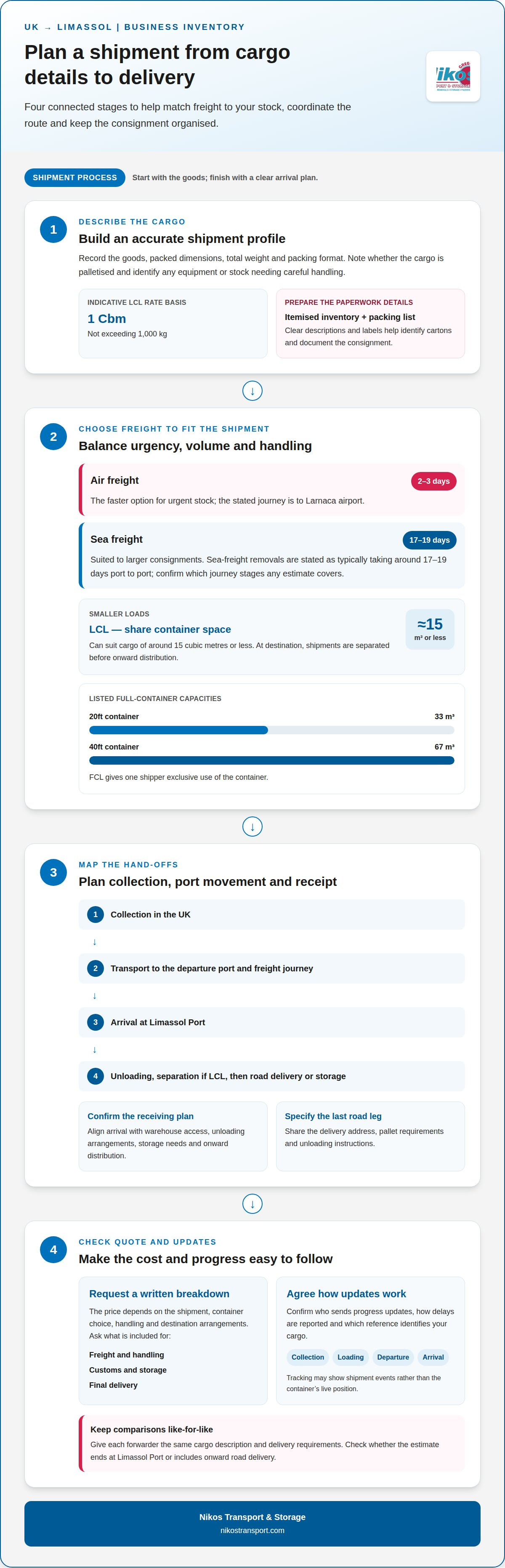
For business inventory shipping to Limassol, sea freight is suited to larger consignments, while air freight is the faster option for urgent stock. Smaller loads can travel in a shared container using Less Than Container Load (LCL), including cargo of around 15 cubic metres or less. Sea-freight removals typically take around 17 to 19 days port to port; air freight to Larnaca airport takes 2 to 3 days.
Choosing a route is only part of the decision. You’ll also need to consider what you’re sending, when it needs to arrive and how the inventory is packed and itemised. Office equipment such as IT racks and desktop computers, along with business documents and supplies, can form part of a commercial consignment.
This guide explains the types of business goods that can be shipped to Cyprus, how air and sea freight compare for speed and cost, and which customs documents to prepare. It also covers shared-container shipping and the practical details that help keep a shipment organised from collection in the UK through to arrival in Limassol.
Key Takeaways
- Match the freight method to your stock’s urgency, size and handling needs to make a more informed shipping decision.
- See how shared-container shipping can suit smaller consignments without requiring a dedicated container.
- Prepare a clear inventory and packing list so the shipment’s contents are properly documented for customs.
- Understand how transport to Cyprus and storage can support your business when shipment timing and logistics need coordinating.
UK-to-Limassol less-than-container-load sea freight
LCL lets businesses ship smaller consignments to Cyprus without booking a whole container. For business inventory shipping to Limassol, choose between shared and full-container freight based on cargo volume, timing and handling needs.
Container unloading, storage and distribution
With LCL, your goods share container space with consignments from other businesses. At the destination, the container is unloaded and each shipment is separated before onward distribution. Confirm how unloading, storage and delivery fit together, especially if stock may arrive before your premises can receive it. Clear labelling helps distinguish your cartons from other consignments.
Container capacity and prices
A 20ft container has a listed capacity of 33 cubic metres, while a 40ft container holds 67 cubic metres. LCL can suit cargo of around 15 cubic metres or less; a full-container load (FCL) gives one shipper exclusive use. The shipping price depends on the shipment, container choice, handling and destination arrangements, and is given after a quote request.
For transfer-of-residence relief in Cyprus, household goods must have been possessed and actually used in the previous country of normal residence for at least 6 months, according to the Cyprus Customs and Excise Department. This applies to household goods, not a business stock consignment.
Freight forwarding and shipment tracking
A freight forwarder organises the movement of goods, including transport arrangements and shipment paperwork. Ask how progress updates are shared, which shipment milestones are tracked and how delays are reported. Tracking may show events such as collection, loading, departure and arrival rather than the container’s live position. Agree who provides each update and which reference identifies your cargo.
Comparing freight companies
Compare forwarders by checking whether they handle LCL and FCL, explain the route to Limassol, and set out unloading and final distribution arrangements. Ask what is included in the quote and how changes to cargo details affect the plan. Businesses generally use UK freight forwarders arranging commercial transport to Cyprus; choose an option suited to your load size and delivery requirements.
Air freight and sea freight timing and cost
Air, sea and road freight each suit different parts of an international shipment. For stock going to Limassol, compare timing with cargo size, urgency and delivery arrangements.
Comparing air, sea and road freight
Air freight to Larnaca airport takes 2 to 3 days, making it the faster option for urgent stock. Sea freight transit times to Limassol can vary depending on the shipment and the journey stages included in the estimate. These are different estimates, so establish which journey stages a quoted transit time covers.
Road freight can connect a port with a warehouse or final delivery address. A pallet may suit goods that need consolidated handling, while a small, urgent consignment may favour air. Personal effects and business inventory have different purposes, so describe the cargo accurately when arranging transport.
Indicative rates and exclusions
An indicative rate can help with budgeting, but may not cover every stage of an international shipment. Ask for a written breakdown of the freight, handling, customs, storage and final-delivery costs included. The total depends on factors such as cargo dimensions, weight, packing, route and handling requirements.
For a useful comparison, give each forwarder the same inventory description and delivery requirements. Check whether the estimate covers transport to Limassol Port only or onward road delivery too. A lower freight charge may not reflect the full shipment cost if other services are charged separately.
Shipping assistance can also involve coordinating packing, collection, freight arrangements and delivery information. Agree who will provide shipment updates and what reference to use when following progress. For example, a stock consignment split between air and sea may need separate schedules and receiving arrangements.
Road transport matters at both ends of the sea journey: goods must reach the departure port, then move from Limassol Port to their destination. Include the collection point, delivery address, pallet requirements and unloading arrangements in the shipping instructions. This helps align port transport with warehouse access and stock-receiving plans.
Commercial cargo shipping to Limassol
Commercial cargo planning starts with an accurate description of the goods, their weight and how they are packed. For a UK shipment to Limassol, these details help identify a suitable freight method and clarify handling from collection to destination.
An indicative LCL rate is based on cargo of 1 Cbm not exceeding 1000 Kgs. Share the packed dimensions and total weight, as well as whether the goods are palletised. The cargo profile affects how a consignment is assessed and handled within the freight network. For example, a light but bulky carton and a compact, heavy crate need different planning.
Non-palletised cargo can incur a charge per pallet, so include the packing format in the shipment details. Palletising can simplify handling, but the right method depends on the goods, their packaging and how they will be unloaded. Give the forwarder an itemised cargo description before collection, including any equipment or stock needing careful handling.
Commercial warehousing can help when inventory reaches its destination before the receiving site is ready. Confirm the planned arrival, storage period, access arrangements and onward distribution sequence. For example, a business opening new premises in Cyprus may need stock stored before its first delivery. Clear instructions help coordinate storage with the final transport leg.
Insurance and carrier liability are different considerations for a commercial shipment. Review the applicable cover, limits, exclusions and claims process in relation to the value and nature of the goods. The cargo description and evidence of condition can help support that review.
For a smooth removal or stock transfer, organise the paperwork around the cargo itself. Match the packing list to the physical packages, label each pallet or carton with its destination, and keep shipment references together. If the consignment includes several product types, separate them clearly in the inventory so the receiving team can identify each group on arrival.
Customs inventory and packing-list requirements
A clear inventory describes your export goods, helps organise customs clearance and matches paperwork to the shipment. For business inventory shipping to Limassol, prepare a consistent list before collection and keep its details aligned with each package.
Record each product type, quantity, package count and packing format. Add the shipment’s volume and weight, and identify goods separately when a consignment contains different stock lines. For example, list cartons of clothing separately from boxed electronics instead of using one vague description. A customs declaration should reflect the actual cargo, not a general label such as “business goods”.
Cyprus’s standard VAT rate is 19%, with reduced rates of 9%, 5% and 0% applying to specific goods and services. Goods manufactured in the UK are exempt from import duties in Cyprus. VAT treatment depends on the goods and applicable rate, so distinguish the country where goods were manufactured from the country they are exported from.
Pack stock in sturdy cartons or secure it on pallets where suitable. Label each package with its contents or stock reference, destination and package number, then ensure these identifiers match the packing list. Keep labels visible and avoid mixing unrelated product lines in one package unless the inventory clearly describes them. This makes goods easier to identify during handling and delivery.
Complete documentation matters for timing: customs clearance for a UK-to-Cyprus removal typically adds 2 to 5 working days when the paperwork is complete. A customs declaration service can help organise the declaration and shipment information. Keep the inventory, packing list and transport details together so the same cargo descriptions follow the shipment from export to arrival in Cyprus.
For help arranging transport and customs paperwork for Cyprus, discuss your shipment requirements.
Nikos Transport & Storage
Nikos Transport & Storage helps businesses arrange transport to Cyprus when stock, equipment or operational goods need moving from the UK. Its international transport and UK removals services can support a wider relocation, while storage can bridge the gap between a shipment’s arrival and readiness to receive inventory.
Turn to the team when you need help coordinating a move to Cyprus or arranging storage alongside your plans. Share what you’re sending, where it needs to go and your schedule, so the transport arrangements can be discussed around your business requirements.
For a straightforward conversation about your shipment, contact Nikos Transport & Storage.
Plan your next stock movement with confidence
A shipment plan works best when it fits the way your business receives, stores and releases stock. Before arranging business inventory shipping to Limassol, consider how the arrival date will affect storage capacity, staff and onward distribution. Aligning these plans can make the move easier to manage and help limit disruption to day-to-day operations.
Nikos Transport & Storage arranges transport to Cyprus and from Greece, with storage available when inventory and receiving schedules do not line up. Share the cargo details, collection point and delivery requirements to discuss a practical plan for your business.
Contact Nikos Transport & Storage to discuss your shipment and decide on a suitable next step. With a clear plan in place, you can prepare for the move with greater confidence.
Frequently Asked Questions
What Can You Ship to Cyprus?
Commercial consignments can include business stock, office equipment and work supplies, subject to the goods’ import requirements. Examples include desktop computers, IT racks, business documents and stationery such as letterhead or envelopes. Describe each product type accurately and separate different stock lines in the inventory. This helps the shipment paperwork reflect what is actually packed, rather than relying on a broad description such as “office goods”.
How Much Do Removals to Cyprus Cost in 2026?
There’s no single removal price for every shipment. Nikos Transport & Storage uses quote-based pricing, with the cost depending on distance, volume and any extra services required. For a useful estimate, provide the collection and delivery details, an inventory of the goods, and whether packing or storage is needed. A small deposit may be required to secure a booking.
Sea freight or air freight?
Choose sea freight when you need to move a larger consignment and can plan around a longer journey. Air freight may suit urgent stock when speed matters more than shipment size or budget. Compare the cargo’s weight and dimensions, the required arrival date and how goods will reach their final address. Sea freight also requires coordination between port handling and onward delivery.
What documents do I need?
Prepare an inventory or packing list describing the goods and how the shipment is packed. A customs declaration is also part of the paperwork for an international shipment. Keep product descriptions consistent across these documents and package labels; for example, distinguish computer equipment from general office supplies. Organised, consistent details make cargo easier to identify during handling.
Which items are prohibited or restricted?
Whether an item can be shipped depends on its type and the import requirements that apply in Cyprus. Don’t assume general business stock is automatically acceptable: clearly identify unusual, controlled or sensitive products in the inventory before arranging transport. The item’s description and intended use help establish how it should be declared and handled. Avoid vague labels that could obscure a package’s contents.
What are the shipping options and transit times from the UK to Limassol?
Options include shared-container sea freight for smaller consignments, a dedicated container for larger loads, and air freight for urgent shipments. Sea journeys terminate at Limassol Port, while air cargo may arrive through Larnaca airport and require onward transport to Limassol. Transit depends on the route and the stages included in the estimate, so distinguish port-to-port timing from collection and final delivery.


