

Your move-out date arrives before you can get the keys to your new home. Suddenly, you need somewhere safe and practical for your belongings, without turning one timing problem into a complicated move. Short term storage UK can provide a useful bridge while dates, renovations or other plans fall into place.
If you’re unsure how much space you’ll need, how to find things later or how storage affects transport, a little planning can help. Treat storage as part of the move, with a clear plan for what goes in, when it comes out and where it goes next.
This guide explains when short-term storage makes sense, how to estimate and organise your belongings, and how to plan the journey from your home into storage and on to delivery. It also covers how storage, removals and packing can fit together. Nikos Transport & Storage provides UK warehouse storage, removals and packing services to support moves and temporary transitions.
Key Takeaways
- A gap between moving dates can be planned for, with temporary storage acting as a practical bridge.
- Plan short term storage UK around your dates, belongings, access needs and transport arrangements, rather than assuming a standard storage period.
- Compare self-storage with removals-linked storage to decide how you want to organise transport and handling.
- Sort, list, pack and label belongings clearly, and keep essentials separate so they are easy to find.
- Including storage, removals and packing in one plan can help keep each step, from collection to delivery, manageable.
When Does Short-Term Storage in the UK Make a Move Easier?
A gap between moving dates doesn’t mean your move has gone wrong. If you need to leave one property before you can settle into the next, temporary storage gives your belongings a planned place to go in the meantime. Short-term storage is space used temporarily for possessions or other items during a change in circumstances, rather than for an ongoing storage need.
Short-term storage is defined by its purpose and flexibility, not by a fixed industry-wide timescale. The right period depends on what’s changing and when you’ll need your belongings again. In the UK, short term storage can help make a move more manageable when you’re dealing with:
- A gap between completion dates, tenancy end dates or access to your next home.
- Renovation work that means furniture and other belongings need to be moved out of the way.
- Downsizing while you decide what will fit in your new home.
- A temporary change in living arrangements, such as staying with family during a move.
Common reasons to use temporary storage
Moving dates don’t always align neatly. If you have to leave your current home before the next one is ready, storage can bridge the gap. Plan collection, storage and onward transport as connected steps, rather than treating the gap as a separate, unplanned move.
During renovation, belongings may need to be moved out to make room for work, then returned when the space is ready. If you’re decluttering before a move or sale, temporary storage can give you time to sort items without crowding your day-to-day living space. A temporary change in household arrangements may call for storage too. In that case, set aside items you’ll need soon before packing the rest.
Storage isn’t limited to household possessions. A business may need temporary space for stock or equipment during a change in premises or working arrangements. The purpose of Self storage can vary for individuals and businesses, so consider what you’re storing and when you’ll need it back.
Is short-term storage only for moving house?
No. A home move is one common reason, but temporary space may also help during renovation, decluttering or a short-term change in where you live or work. These situations call for different plans. Someone storing furniture between homes may have different timing and access needs from a business storing equipment during a premises change.
To distinguish a short transition from an ongoing storage requirement, identify the event that should bring the storage period to an end. If you’re waiting for a property, renovation or temporary arrangement to conclude, plan around that next step and review dates as they become clearer. If you’re moving overseas, give particular attention to timing and the onward destination. Planning UK storage while moving abroad can help you think through that transition.
How to Plan Short-Term Storage Around Your Dates and Belongings
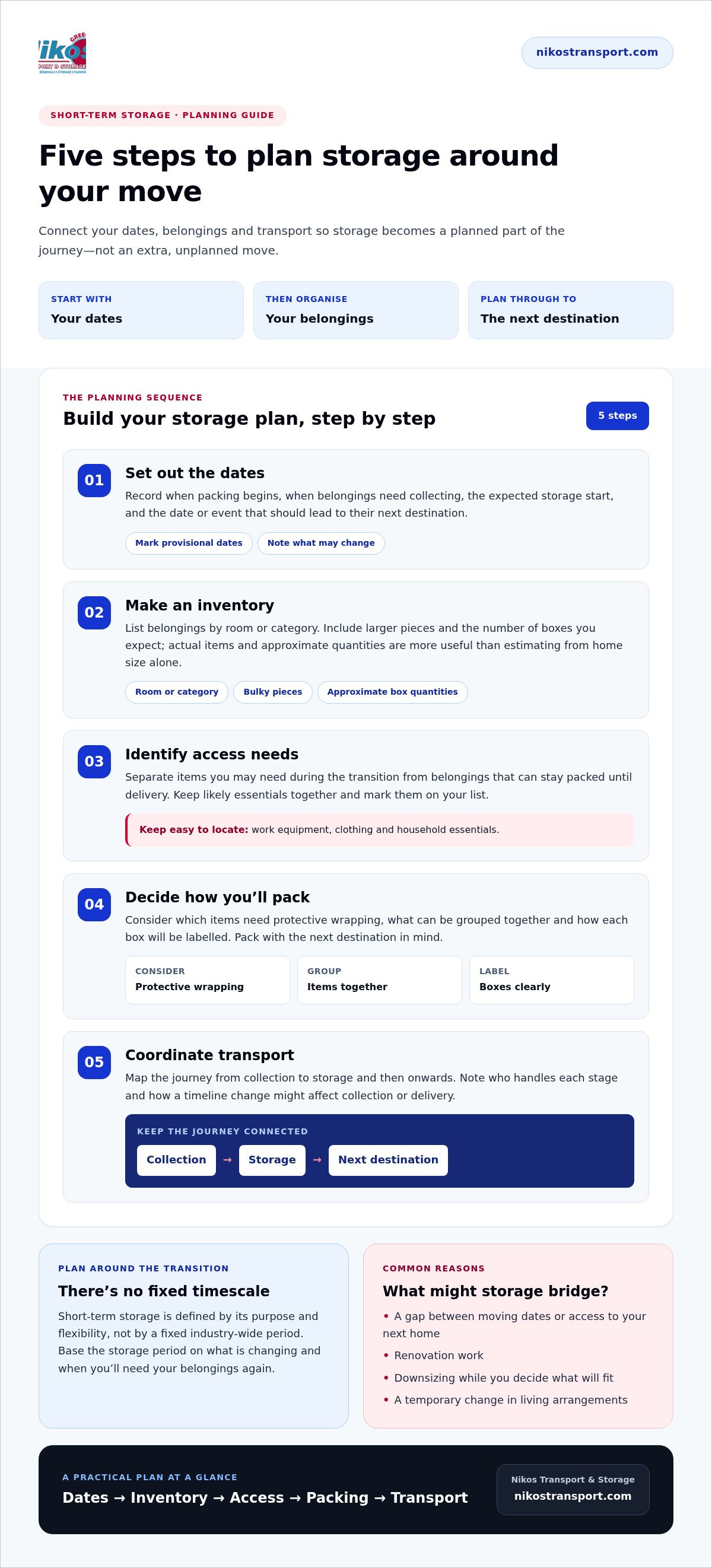
A clear plan turns storage from an extra stop into a purposeful part of your move. Start with the dates and belongings involved, then decide how you’ll pack and transport everything. Base the storage period on your transition, not on a supposed standard duration. If completion or handover dates shift, a written plan makes it easier to see what needs updating.
- Set out the dates. Record when packing will begin, when belongings need to be collected, the expected storage start and the date or event that should lead to their next destination. Mark provisional dates and note what may change.
- Make an inventory. List belongings by room or category, including larger pieces and the number of boxes you expect. A list of actual items and approximate quantities is more useful for planning than estimating from the size of your home alone.
- Identify access needs. Separate items you may need during the transition from those that can stay packed until delivery. Keep likely essentials together and mark them on your list so they’re easy to locate.
- Decide how you’ll pack. Consider which items need protective wrapping, which can be grouped together and how you’ll label each box. Pack with the next destination in mind so items for different rooms or recipients are easy to sort.
- Coordinate transport. Map the journey from collection to storage and then to the destination. Note who is handling each stage and how a change to the timeline might affect collection or delivery. Keeping these details together helps reduce avoidable handling and confusion.
Build a timeline before belongings go into storage
Connect the storage period to your moving timeline. Put packing, collection, storage entry and the expected next destination in one place. Then identify belongings you may need if dates change, such as work equipment, clothing or household essentials. Mark these clearly in your inventory and packing plan instead of relying on memory when plans are busy.
Estimate the space and access your belongings need
Group your inventory by room, item size and whether you’ll need each item during storage. Include bulky pieces as well as boxes: a list of shapes and quantities is more useful than a guess based only on the property you’re leaving. Your notes can also help you decide how belongings should be packed and what may need to come out first. For a general overview of the UK storage sector, the Self Storage Association UK (SSA UK) offers industry information and research.
Once your dates, inventory and transport needs are clear, bring them together into a practical storage plan. Explore Nikos storage services as you consider how storage can work alongside packing and removals.
Self-Storage or Removals-Linked Storage: Which Setup Fits Your Move?
Choosing storage is only part of the decision. You’ll also need to plan how belongings get there and how they continue to their next destination. For short term storage UK, self-storage and removals-linked storage can suit different preferences. One puts more of the organisation in your hands; the other connects storage with a wider move.
Storage provides the space; the transport and handling plan determines how your belongings get in and out. Compare both parts against your dates, the amount you’re storing and how involved you want to be in moving it.
| Planning point | Self-storage | Removals-linked storage |
|---|---|---|
| Who organises transport? | You typically arrange how belongings travel to storage and how they’ll reach their next destination. | Storage planning can sit alongside removals and transport, so you can consider both journeys together. |
| How do belongings move in? | You plan the move into storage, including how items will be carried and transported. | Collection and storage are considered as part of a broader removals plan. |
| What planning is involved? | Think through transport, timing, packing and how you’ll manage each stage. | Coordinate dates, belongings and the onward destination as connected parts of the move. |
What self-managed storage involves
With a self-managed approach, you typically take responsibility for getting possessions to storage and arranging their onward journey. This can suit you if you want control over each stage and are comfortable coordinating transport yourself. Consider how both journeys fit your schedule, and whether you’ll need separate help to move larger or heavier belongings.
Convenience means different things to different people. You might prefer to manage each step, or find it easier to bring storage and removals planning together. Storage arrangements and terms vary, so check the details that matter to your plan, such as notice periods, minimum stays and access arrangements.
When storage coordinated with removals may suit
If there’s a gap between leaving one home and entering another, coordinating storage with removals can help you plan collection, temporary storage and later delivery as one sequence. You can consider the timing and handling across the whole journey. Planning the route from the outset still matters, as storage does not automatically remove extra journeys or handling steps.
Nikos Transport & Storage provides UK warehouse storage alongside UK removals and packing services. Bringing these elements into one plan helps connect your belongings, dates and next destination. The right fit depends on how much transport you want to organise yourself and how closely you want storage to sit within the wider move.
How to Prepare Belongings for a Short Stay in Storage
Good preparation makes it easier to keep track of belongings and organise their return or delivery. Before packing, decide what you’ll store, what you may need before everything is delivered and where each group of items is going next. This connects packing with the wider move and makes boxes easier to sort later.
- Sort belongings. Separate items for storage from those you’ll keep with you or no longer need. Set aside everyday essentials and anything you’ll need before the next delivery.
- Make an item list. Record the contents of each box or group of belongings. Note larger items separately so your list covers more than the number of boxes.
- Choose suitable packing materials. Match the box or wrapping to the item, and use appropriate protection for fragile belongings. Pack similar items together where practical.
- Label each box. Mark the contents and the room or destination it belongs to. Use clear, consistent labels that you can refer to during the next stage of the move.
- Keep essentials accessible. Put documents and items you’ll need before delivery to one side, rather than packing them with belongings intended for storage.
Create an inventory and label boxes clearly
An inventory is most useful when it helps you find things, not when it becomes a long, difficult-to-read catalogue. Give each box a clear label and a matching entry on your list, such as “kitchen, mugs and utensils” or “bedroom, bedding”. Add the intended room or destination too, especially if belongings are going to more than one place.
Use the same labelling approach throughout and write where the information will be easy to see. If a box contains fragile items, mark that clearly for the next move. Keep important documents, medication and other essentials separate from stored boxes, so you’re not relying on unpacking to find them.
Pack for the planned storage period
Prepare belongings clean and dry, and choose packing materials that suit the items you’re protecting. Wrap fragile items individually with appropriate cushioning, and avoid mixing them loosely with heavier objects. Group similar belongings together, while keeping items for the same room or purpose easy to sort at the destination.
Think ahead to delivery as you pack. If you’ll need certain belongings first, mark them clearly in your inventory and avoid hiding their labels beneath other boxes. A clear list and consistent labelling make retrieval and delivery easier to organise, whether you’re moving into one home or sorting belongings across different destinations.
For further guidance on packing for an overseas move, see these packing boxes for moving abroad tips. To organise storage alongside packing and removals, explore Nikos storage services as part of your short term storage UK plan.
Plan Your Short-Term Storage with Nikos Transport & Storage
Storage works best as part of a move plan, not as a separate problem to solve after everything else is arranged. Nikos Transport & Storage provides UK warehouse storage alongside removals and packing services. Plan how your belongings will move from their current home to storage and then to their next destination. The plan can reflect your transition, whether dates are settled or still taking shape.
How storage can fit into a wider move
If you can’t move straight into your next home, storage can sit between collection and delivery. Planning removals, packing and storage together helps map each stage: what needs packing, what is going into storage and where it needs to go afterwards. It also helps identify belongings that need a different arrangement, such as items you’ll keep with you during the gap.
For an overseas move, the next destination is an important part of the storage plan. Consider how the storage period fits with your departure and onward move, and which belongings are intended for your UK home, the overseas destination or another arrangement. Planning international removals from the UK can help you consider the wider move alongside your storage needs.
Nikos is a family-owned business founded in 2003. Its storage and removals services can be planned around the details of your move, rather than treating every transition as identical.
Prepare the details for a useful storage plan
You don’t need every detail settled before you start planning. A few clear notes can help you work out how storage fits your move. Bring together:
- Your estimated dates for packing, collection, storage and onward delivery, noting which are provisional.
- An inventory or outline of the belongings you expect to store, including larger items and anything you’ll need during the transition.
- The intended next destination, and whether belongings are moving together or going to different places.
These details connect the storage period to the shape of your move. If dates change, update the timeline and destination information to give yourself a clear starting point for adjusting the plan. You can work through it one practical step at a time.
For support bringing storage, packing and removals into one plan, discuss your storage and moving needs with Nikos.
Take the Next Step with a Clear Plan
Your next step doesn’t need to be complicated. Write down what’s changing, which belongings need a temporary home and where they’re expected to go next. Even if some dates are uncertain, a clear starting point can make short term storage UK a manageable part of your plans.
As your arrangements develop, keep your notes together and update them when dates or destinations change. This gives you a useful basis for planning how storage, packing and transport fit around your move, without needing every detail resolved at once.
Nikos Transport & Storage provides storage, packing and removals services to help you plan around your transition. Discuss your storage and moving needs with Nikos to start organising the next steps.
Frequently Asked Questions
How long is short-term storage in the UK?
There’s no universal duration that defines short-term storage in the UK. The right period depends on why you need space and when you expect to use your belongings again. A delay before moving into a new home may call for a different plan from a renovation with an uncertain finish date. Set an initial review date, then revisit the plan if your circumstances change.
Can I use short-term storage between moving dates?
Yes. Storage can bridge a gap when you need to leave one property before your next home is ready. It can help if completion dates shift or access to the new property is delayed. Make a note of belongings you’ll need during the gap, such as work clothing or children’s school items, and keep them with you rather than packing them away.
What should I put in short-term storage?
Consider storing belongings you won’t need until your next home or space is ready, such as spare furniture, boxed kitchenware, books, decorations or seasonal clothing. Think about when you’ll need each item again, not just whether it fits in a box. Keep important documents, daily medication, chargers and a change of clothes accessible during the transition so you’re not searching through stored possessions for everyday essentials.
How do I estimate how much storage space I need?
Start with a room-by-room list, then note the quantity and approximate dimensions of bulky belongings such as wardrobes, sofas and appliances. Property size alone can be misleading: two homes with similar floor areas may contain very different amounts of furniture and boxes. If possible, measure larger items and record whether they can be dismantled. This gives you a clearer picture for planning the storage arrangement.
Is short-term storage useful during a home renovation?
Yes. It can keep furniture and possessions out of rooms while renovation work is under way. Plan around the order of the work. For example, decide whether bedroom furniture can stay in place until that room is next, or whether clearing it early will make the project easier. Keep a note of which belongings belong in each room so you can organise their return as areas are ready.
How should I prepare belongings before putting them into storage?
Make sure belongings are clean and fully dry before packing, and avoid sealing damp items into boxes. If you dismantle furniture, keep screws and fittings together in a labelled bag and attach it securely to the relevant piece. Take a quick photo of complex assemblies or cable connections before taking them apart. These steps can save time when you’re ready to set up your belongings again.
Can storage be arranged as part of a removal?
Yes. Nikos Transport & Storage provides UK warehouse storage alongside UK removals and packing services, so storage can be planned within the wider move. Share your estimated collection and delivery dates, a list of the belongings involved and their intended destination to connect each stage. This can be useful if your move involves a temporary stop before belongings continue to their final home.


